I had been planning for a trip in the spring of 2024, but the destination wasn’t Peru. My group of friends and I actually had our eyes set on Ireland, but due to some scheduling complications, Ireland was pushed to 2025. My friend J and I still wanted to go somewhere this March, so we tossed a few options around and eventually settled on Peru.
I am so glad we did.
Peru’s weather looked decent, even though March is the tail end of the rainy season. Peru wasn’t too hard to get to and it also didn’t look that expensive. We decided that we could plan our own trip well enough and we did. Transportation was pretty straightforward, most everyone in the touristy sections of the country spoke English, and my Spanish was good enough to get us around elsewhere.
It was a full day of flying from New Mexico to Lima (via Atlanta), but that’s the case for getting almost anywhere from Albuquerque. Our small airport has a lot of advantages, but tons of non-stop flights to international destinations is not one of them. From Atlanta, Lima was about a 6.5 hour flight. We sucked it up and sat in economy rationalizing that our flight was during the day and that we’d be able to get a good night’s sleep upon arrival in Lima. (We booked 2 rooms at the Wyndham Costa del Sol at the Lima airport. LITERALLY at the airport – we just had to cross the street). The hotel was great and really convenient. A bit of airport noise, as expected, but it was nice to shower, sleep and have breakfast before heading back for our next flight.
After resting up in Lima, we hopped a quick flight, just about an hour, to Cusco, Peru, where we’d base ourselves for the next week. The views coming into to Cusco were just stunning.

Peru is a very large country with many cool things to see, but ultimately, we wanted a slightly less chaotic pace and decided that Cusco and the Sacred Valley would be the spot were we focused our time.
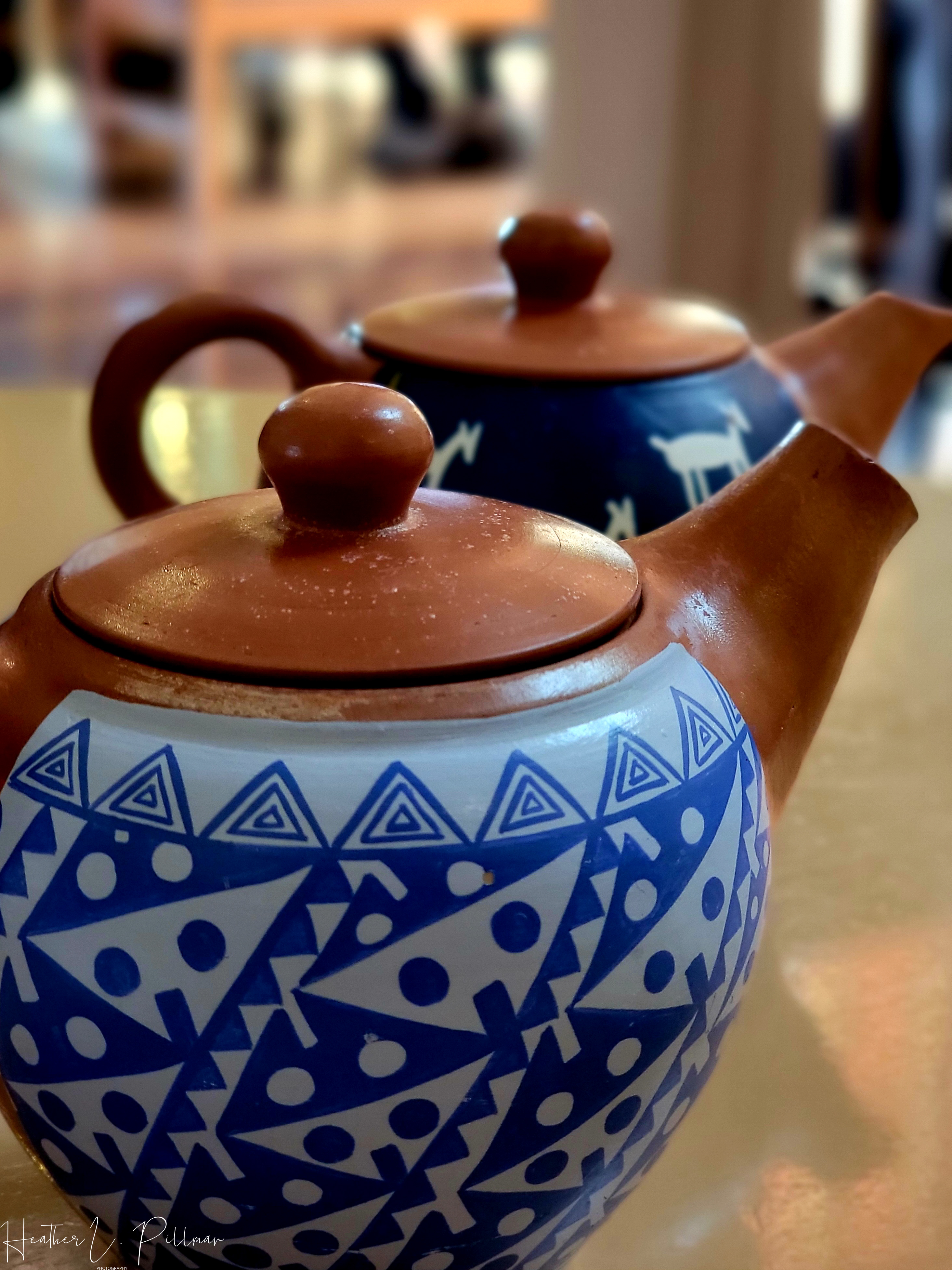
Cusco’s elevation is high. The city sits at approximately 11,200 feet. I was a little wary of staying at this altitude. My home sits at 5,340 feet above sea level, according to the What is My Elevation website. I’m well acclimated to my elevation, but I have encountered a bit of elevation sickness at altitudes over 11,000 feet in the past. We intentionally booked very little for our first two days in Cusco, as recommended, and figured we’d (a) survive and (b) know that we’d feel better when we descended into other locations in the Sacred Valley that weren’t so high. Surprisingly, J and I both did very well. We drank a ton of water and I think staying hydrated really is the key. We also had plenty of coca tea, which our hotel had for free in the lobby.
No headaches or nausea. You definitely can feel yourself sucking for air when walking at a fast pace or climbing a hill or stairs and my leg muscles wanted more oxygen the entire time in Peru, but we did pretty well. If altitude really bothers you, the recommendation is to stay outside of Cusco for a time, at a slightly lower elevation, to acclimate. Don’t think you’ll get acclimated in Lima – it’s at sea level.
We stayed at the newly opened Motto by Hilton which turned out to be a very charming little hotel in a great neighborhood. The hotel is built over its own Incan style terrace and contains only 50 some rooms. The historic and cultural sights in old Cusco were within walking and/or a short taxi ride’s distance. Plenty of restaurants and shops around, too. The staff at the hotel were PHENOMENAL…kind, welcoming, helpful, informative. They even complimented my Spanish.
The one thing that all hotel guests, whether you are at the Hilton or not, will have to get used to is the honking in Cusco. Cusqueños have a whole honking culture. There’s the long, lay on the horn honking that means ‘get out of my way, jackass,’ of course, but there’s also a honk for ‘hurry across pedestrian, I’ll wait for you,’ a ‘get out of the street, dog’ honk, a ‘hello, friend,’ honk, a honk for ‘I’m passing you on the left,’ and countless others. After a while, you tune it out.
Ok, here are some practical things we learned: The hotels, restaurants, and shops in the main tourist parts of old Cusco take credit cards. . I ordered some Peruvian Sole to take with me and then just withdrew cash, as needed, from ATMs in Cusco. There are lots of them. Street vendors mostly take cash although a few of the more entrepreneurial types also took cards. You can find women sitting on the street corners with huge wads of money that will exchange cash for you on the spot. Give them your dollars (or Euro, etc.) and walk away with Soles. We found that ATMs were few and far between in some of the smaller villages, so have a plan to have enough cash with you. The exchange rate when we were in Peru was about 4 Peruvian Soles to every American dollar.
Like many places in the world, you cannot flush the toilet tissue in Peru. Same drill – small waste baskets are placed next to the toilets; deposit your used tissue there. I would highly recommend that you take some toilet tissue with you when you are out and about. I noticed that many of the Inca ruin sites did not have tissue at all and some of the TP you will encounter is….ummmm….chafing (or more the consistency of a paper towel you’d find in an elementary school). You can take some tissue from your hotel or you can buy small rolls of toilet paper that are easy to carry with you. You might consider some individually wrapped wipes. You should be drinking lots of water so take advantage of restrooms in museums, restaurants, etc. when you are out. I only saw one actual public toilet on a square in Cusco.
You need sunscreen and maybe a hat. Even during the rainy season, you need sunscreen. When the clouds part and it lightens up, you feel like you are approximately one inch from the sun. You likely need insect repellent if you will be traveling to any outdoorsy or jungle areas. We treated all of our clothes and gear with Sawyer’s Insect Repellent and took some with us as well. We luckily didn’t encounter any mosquitoes, but they’re there and some of them are of the malaria carrying variety. You need good walking shoes…sneakers, hiking shoes, maybe even a sturdy sandal like a Teva. We saw one tourist lady walking around in her chanclas and I don’t know how she was making it. Streets are cobblestone and/or river rock. Streets are uneven and almost everything in Cusco is uphill. Take some shoes with some support and some tread. If you’ll be hiking any of the Inca ruins, good shoes are a must.
Let’s talk quickly about what to wear. Cusco is very casual, mainly, I suppose, because it is used to the many hikers and trekkers that come through to see the Inca Trail. You are absolutely fine in shorts, leggings, athletic pants, and/or jeans in Cusco. We weren’t turned away from any restaurants because of our attire. If you’re planning to dine out at a fine restaurant, attend mass at the Cusco Cathedral or the like, you might want a nicer outfit. I tried to limit what I brought with me. There are laundry services literally on every corner in Cusco and most offer same day service. I think there were three within a 2 minute walk of our hotel. Layers are good. If you visit in the rainy season a rain jacket or poncho are a necessity. (I found the rain to be much like New Mexico summer rains: short and intense spot thunderstorms that roll in and out quickly). Maybe an umbrella. I will say that Cusco at night was chillier than I anticipated and I wished that I’d had a light puffer coat or a fleece. (Note: not all hotels have heat, so plan accordingly if you are going in the rainy season. Our hotel had heat but it only came on at night and only if the outside temperature dropped low enough. I run cold so I brought a pair of fleece lined leggings that I wore a lot while relaxing in my room at night).
We arrived in Cusco at about 3:00 PM on a Saturday. We checked into our hotel and decided to take a walk and find some dinner. Old Cusco is an incredibly charming city. Old Cusco is also a UNESCO Heritage Site which means that the city is preserved and that no new construction is allowed. If you want to visit the newer and more modern Cusco, you can. New Cusco has the airport, a soccer stadium and all of the new construction. I felt 100% safe as a woman walking around in Cusco, even at night. I would have felt safe traveling here alone had J not joined me. Cusco is really trying to make its reputation as a safe tourist destination known. You’ll see national, city and tourist police presence. That’s not to say crimes like pick pocketting don’t occur; you just have to keep an eye on your valuables like anywhere else in the world.
I want to tell you about two characters we encountered during our first stroll in Cusco. 1. The baby alpaca/baby llama ladies. During baby season (February/March), the Cusco streets are full of women wearing colorful, traditional clothing carrying or leading baby alpacas and baby llamas. They are strolling the streets looking for animal loving tourists like me who want to hold a baby alpaca and have their picture taken. I absolutely wanted this done and we ran into a group of women with the cutest baby alpacas you’ve ever seen. Please be aware that the women expect to be paid for this service. It’s best if you can negotiate a price first. If you don’t, the women will haggle for more money. I wanted my picture with the babies and I had no problem paying for what is probably the worst photo of me ever taken with these cute animals (and no, I’m not posting it here). Please also know that some of the women will push a baby alpaca right into your arms and once you are holding the little animal, payment will be expected. When not looking for a baby alpaca or llama photo opportunity, I learned to walk with my hands in my jacket pockets.
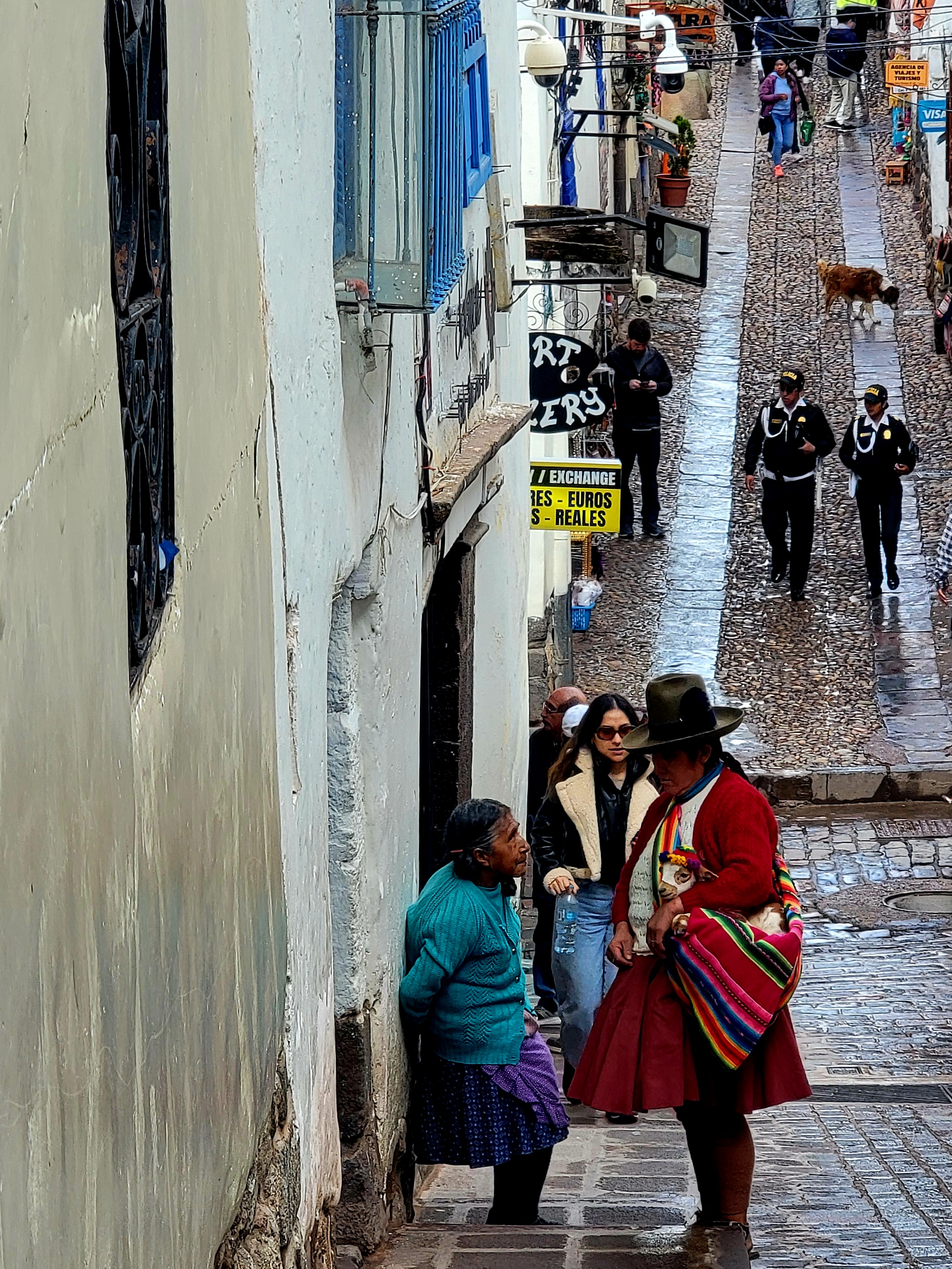
2. The nice aggressive street vendors. There are many young men selling art and women selling jewelry and textiles (as well as people trying to get you to eat at a restaurant, book a massage, or buy a ticket for a tourist bus). None of them were rude, in fact many of them were very helpful in giving us directions or telling us about Cusco. I bought art from a few vendors on the street. There are many, many people looking to sell their art/jewelry/weaving and they will follow you around a bit making conversation, telling you their names and stories and pestering you to look at their particular portfolios. Absolutely none of these people were rude or aggressive in any way, but after a while the continual chorus of ‘nice lady, maybe I can show you my art,’ starts to annoy you like a gnat in your ear. “No ahorrita, gracias,” will become your favorite phrase. They are persistent. Part of me wanted to hire a few of these vendors to sub-contract for me at work.
Dogs. Dogs are all over Cusco, just running freely, but they all seem well fed. What we came to learn is that as people came into the cities from surrounding agricultural areas, they brought their dogs with them. Houses in the city are small and so the dogs became outdoor pets. They explore the neighborhoods but are fed and cared for and most don’t venture too far from home. I wouldn’t attempt to pet any of these dogs, but you will see them cruising all around Peru, lots of them wearing sweaters in the rainy season. (I could count all of the cats we saw on one hand).
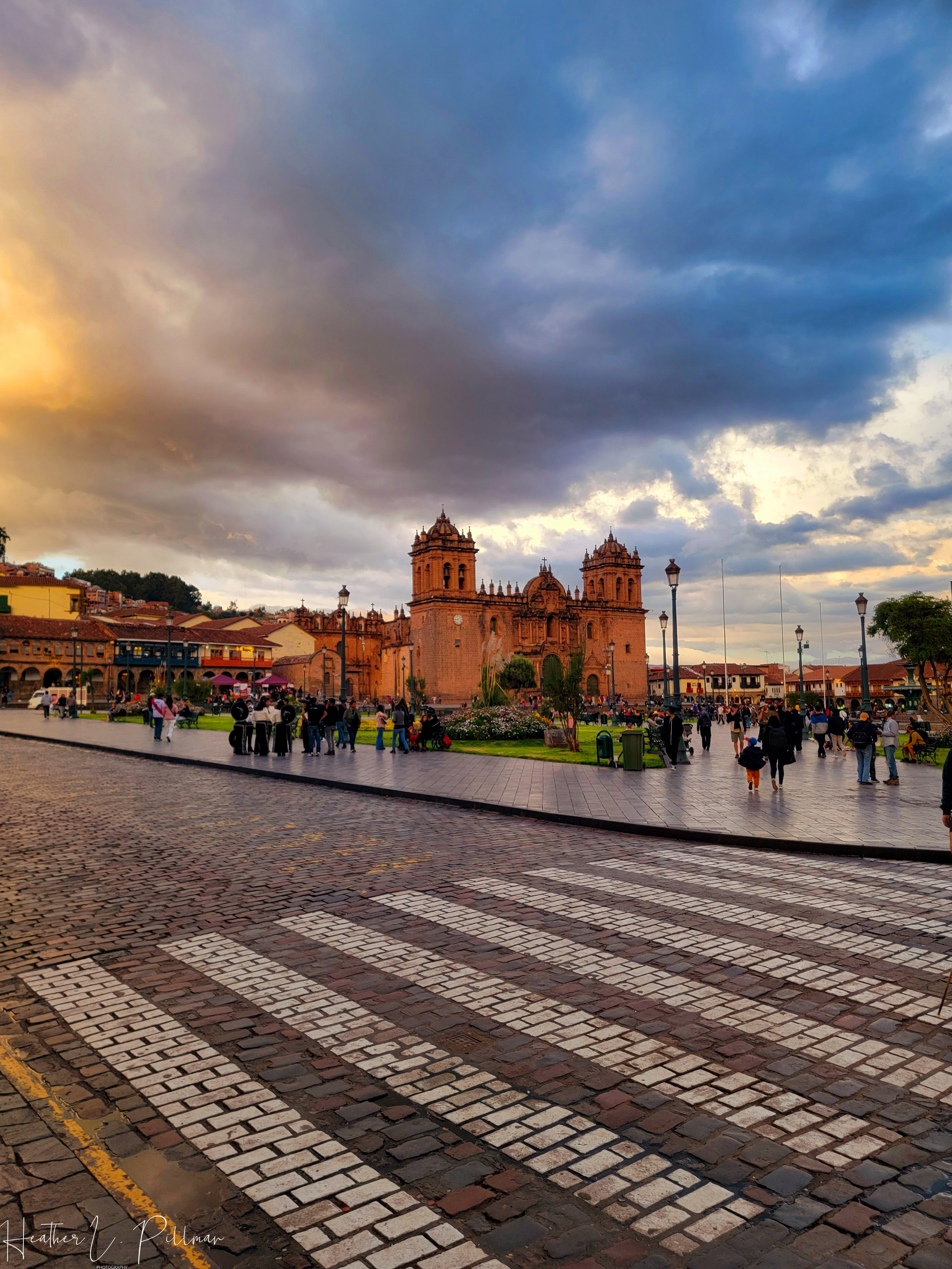
Saturday got us our first look at the Plaza de Armas, the main historic square in Cusco, the Chapel of Our Lady of Loreto, and the Cusco Cathedral. Cusco has 22 Catholic churches. They are all lovely and interesting. Photography is not allowed inside.
At the end of our first day, we took our chances and wandered into a restaurant called the Inka Grill, right off the Plaza de Armas. Typically I’m leery of restaurants in really tourist heavy areas, but in Cusco, we were pleasantly surprised.
The Inka Grill had great food, a nice bar and the most impressive tower of candle wax I’ve ever seen. I don’t know how long those candles have been burning, but it has to have been decades.
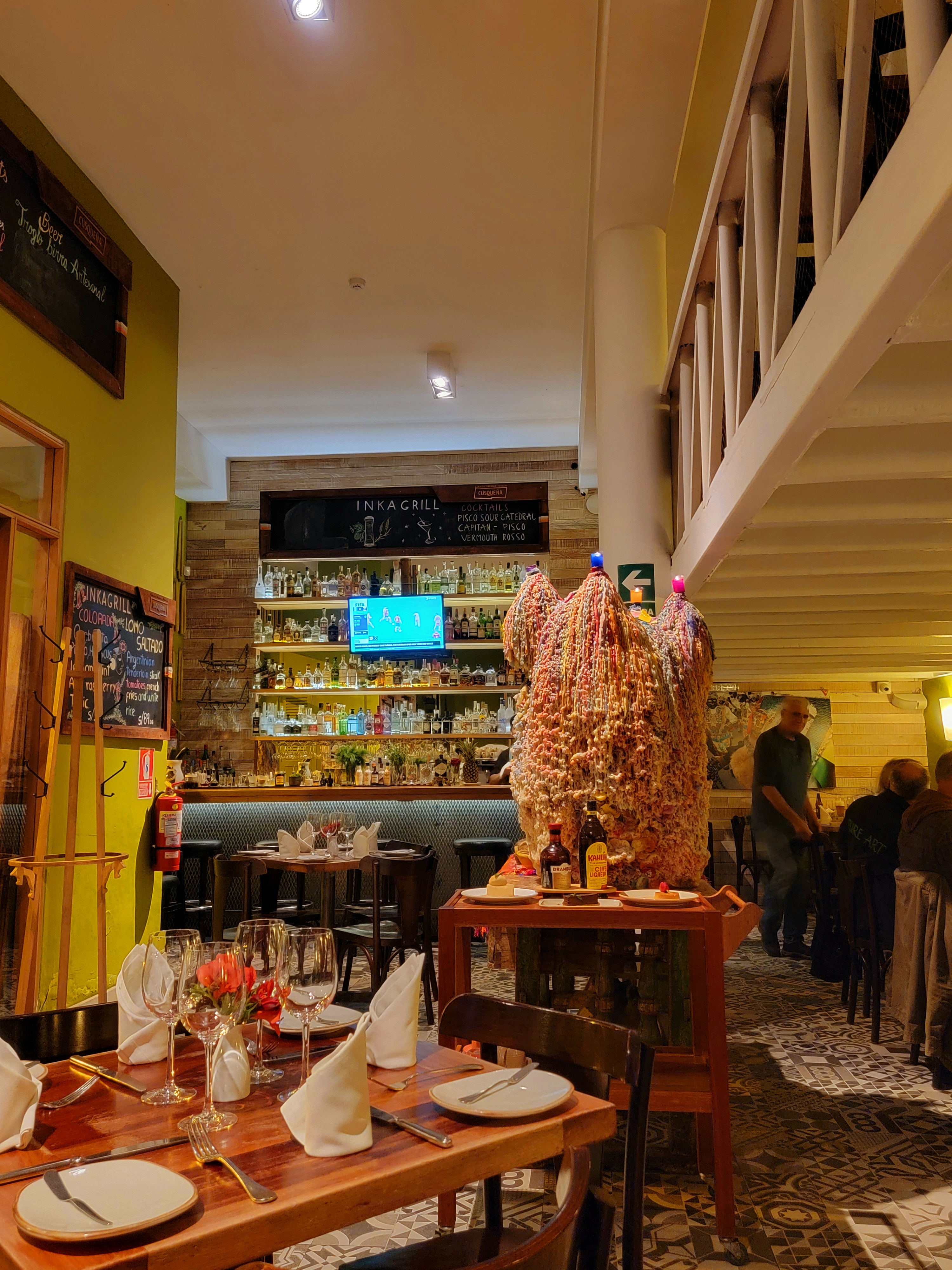
I tried the Lomo Saltado here. It’s a Peruvian specialty, a stir fry of beef, veggies, and French fries over rice. It’s a good time to mention that you do not drink the tap water in Peru. It isn’t safe. It’s fine for bathing, hand washing, and I even brushed my teeth with it, but you will need to find filtered water for drinking. Bottled water is available everywhere and hotels keep large filtered water bottles in the lobby where you can refill your personal bottles. If you are further afield, you might want a bottle with a filter in it. We didn’t have any issues with vegetables or fruits, but be aware of your surroundings. If raw veggies or fruits aren’t washed in filtered water, you might want to skip them entirely or focus only on eating those things that can be peeled.
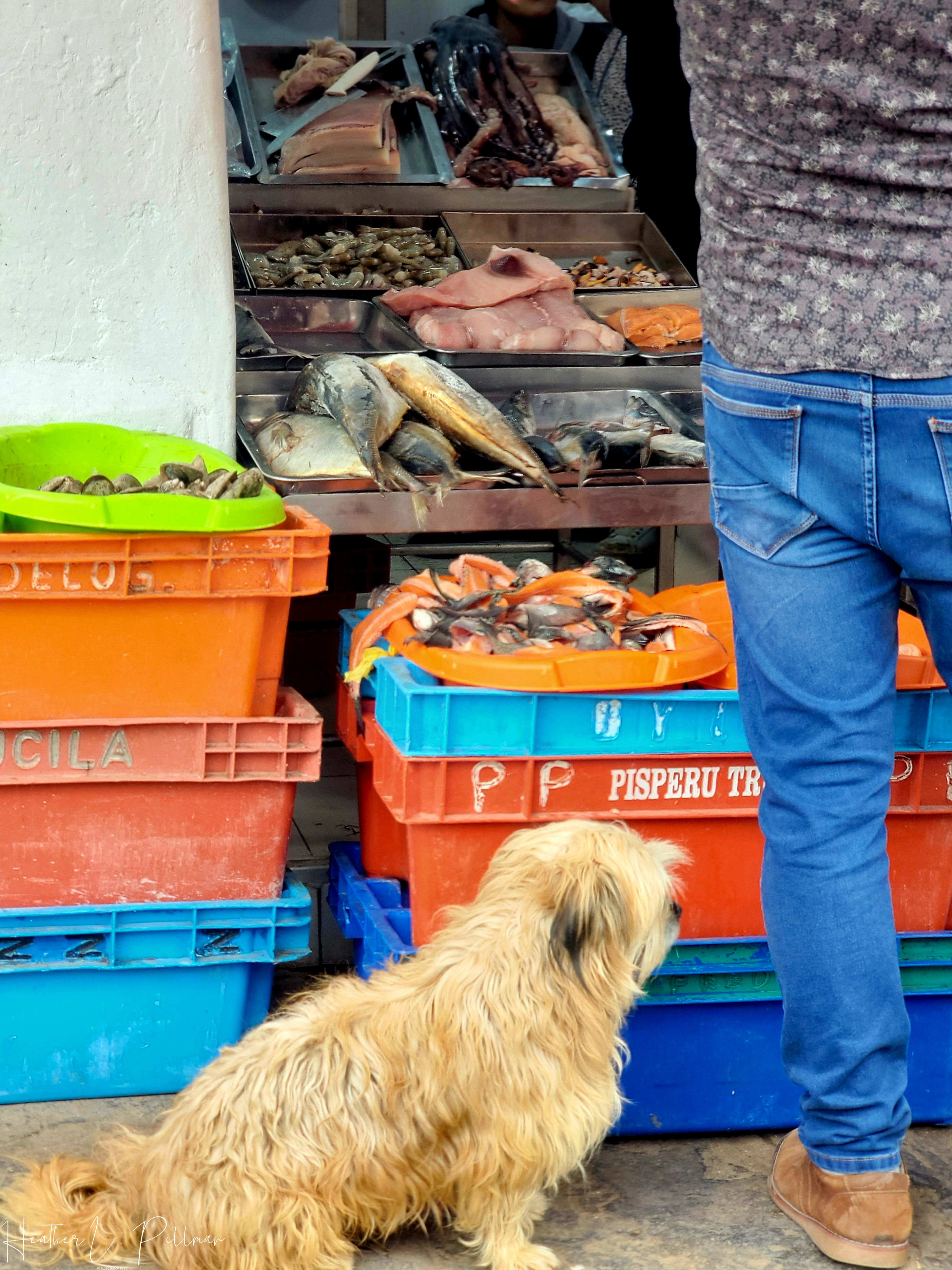
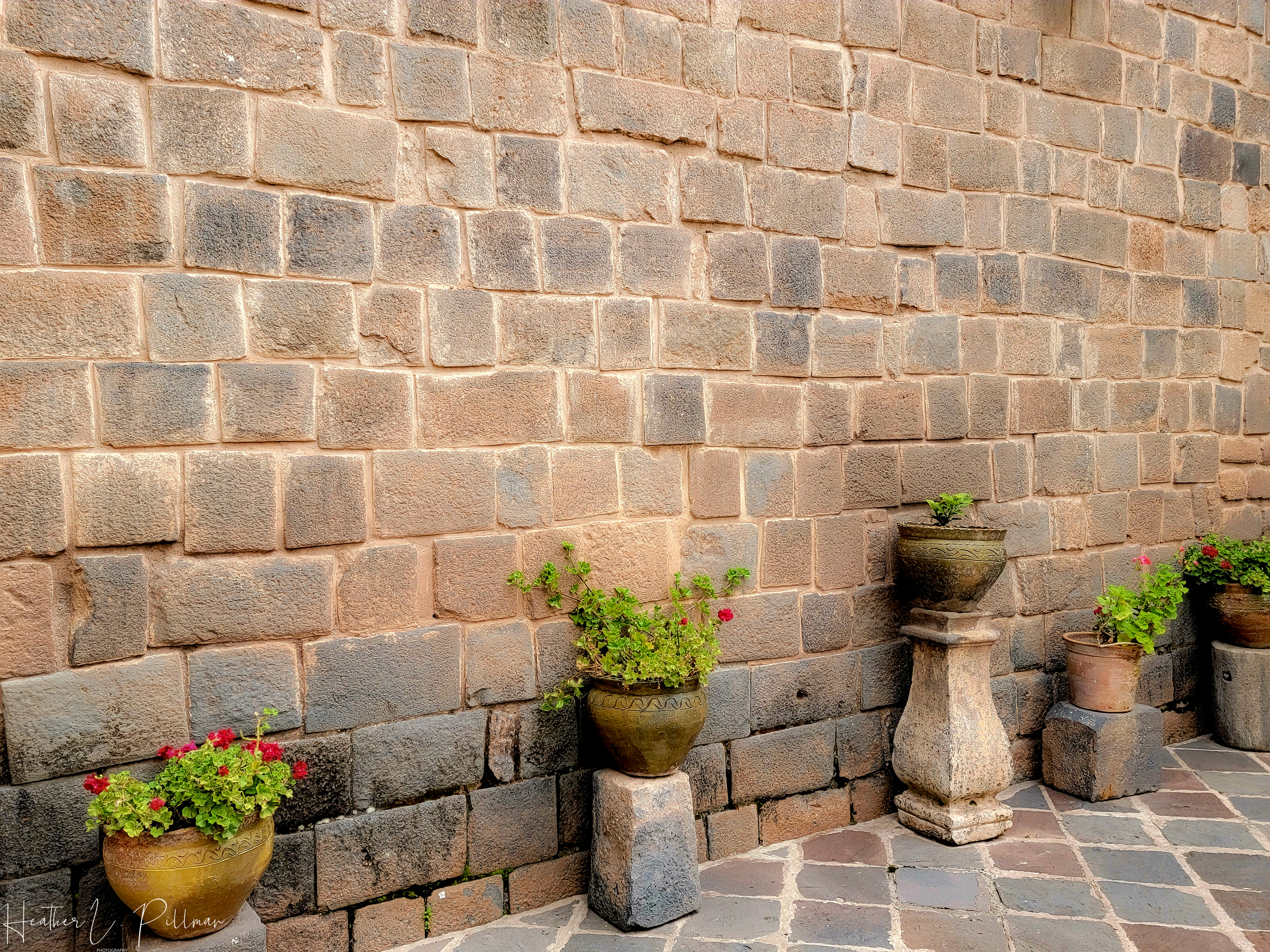
On Sunday, we headed out to see the San Pedro Markets in Cusco. We made our way past our friendly street vendors, stopped to see the impressive 12-sided Incan stone, carved to fit precisely into a wall (more on Incan engineering later), took our photo with a baby llama, and eventually arrived at the market. The market was almost overwhelming in sight and sounds. The more touristy section of the market has textiles, small souvenirs, and etc. but you could also find flowers, cheese, a whole section where you could get soup, vendors selling meat and fish, baked goods and so on. We wandered a bit outside of the main market and strolled the streets of the fruit and vegetable markets until we hit a street that crossed a train track and looked to dead end in a place we didn’t want to be. Everything in these markets is brought in fresh from local farms. Every time I travel outside of the US, I’m reminded how messed up our entire farming and food system has become. We marveled at the variety ofhealthy looking produce. Corn exists here in shapes and colors I’ve never seen and Peru has more than 4,000 varieties of potato.

After our stroll back from the market, I stopped to spend way too much money in a jewelry store. We then we made our way to another restaurant on the Plaza de Armas, recommended by the ladies in the jewelry store, Morena Peruvian Kitchen. Here we had some appetizers: guacamole with cheese and nuts on seeded crackers, papas rellenas, and we tried alpaca. Alpaca wasn’t our favorite and it’s still unclear to me whether or not Peruvians actually eat alpaca or if they just feed it to the tourists. We ended the evening at ChocoMuseo Hatunrumiyoc a chocolate “museum” and shop near the hotel. Those of you that know me, know that I don’t really like chocolate but J does and the shop was a great place for souvenirs.
Monday morning brought croissants from Cioccolina Cafe, right across the street from the hotel. The cutest little bakery had a great staff and the croissants almost as good as the ones in France. We grabbed a taxi and headed up one of the many mountainsides in Cusco to the ruins at Sacsayhuaman. You can walk if you are crazy or young and in shape. Upon arrival, you can purchase a ticket just to this site or a Boleto Turistico Cusco, a tourist ticket, good for several days and several sites in the Sacred Valley in and around Cusco. If you are in the area for at least a few days, it’s a good value and it can be purchased at any of the participating sites in the greater Cusco area.
Sacsayhuaman is an Incan ruin site and although the internet will tell you it was a fortress, the guide we hired at the site itself says Sacsayhuaman was an Incan temple. The remnants that are here today are only about 25% of the massive site. The Spaniards destroyed the rest. The Spaniards came to Peru in the 1520s, spearheaded by Francisco Pizarro who was out to conquer Peru and find the wealth of the Inca Empire. The history of the indigenous peoples in Peru and their treatment by the Spaniards is the same history that played out in New Mexico in a lot of ways. The Conquistadors were ruthless in their pursuits of finding fame and fortune and they left destruction in their path in the Americas. These men were most often second, third, fourth sons who were never going to inherit land, money or power and so they set out to take it on their own. They were assholes. Back to Sacsayhuaman.

It was at these ruins that we got a close up look at how advanced Incan engineering really was. The temple was built with an impressive base underground in addition to the temple that you can see above ground. The walls were rounded. And the three level temple, shaped like a lightening bolt was built to withstand earthquakes. It had an astronomy observatory and had walls so tightly constructed that you could not pass a piece of paper between the massive boulders used to build this place. In Cusco, you can find several sites where the Spanish built higher walls upon the base of the Incan walls and there is no contest about who the better engineers were. Hint: It wasn’t the Spanish.
Our guide explained that the three levels in this particular site were of vast importance to the Inca and we’d see the three levels over and over again in the Sacred Valley. The lower level represented the underworld and is associated with the serpent. The middle level represented the middle earth or the place where man lived and is associated with the Puma. The highest level represented the heavens and is associated with the condor. Incan cities and temples are often built in the shape of an animal. The Inca were followers of moon cycles and astronomy, using events like full moons to guide planting and harvesting. They were keenly attuned to the solstices. In almost every ruin, you will find an Intipunku or a Sun Gate. Inti was the Sun God.. Note: the Spaniards are the ones that intimated that the Incas main god was the Sun God, but Incans were likely polytheistic as there were gods/goddesses representing many things in nature (sun, moon, Earth, rainbows, etc.)
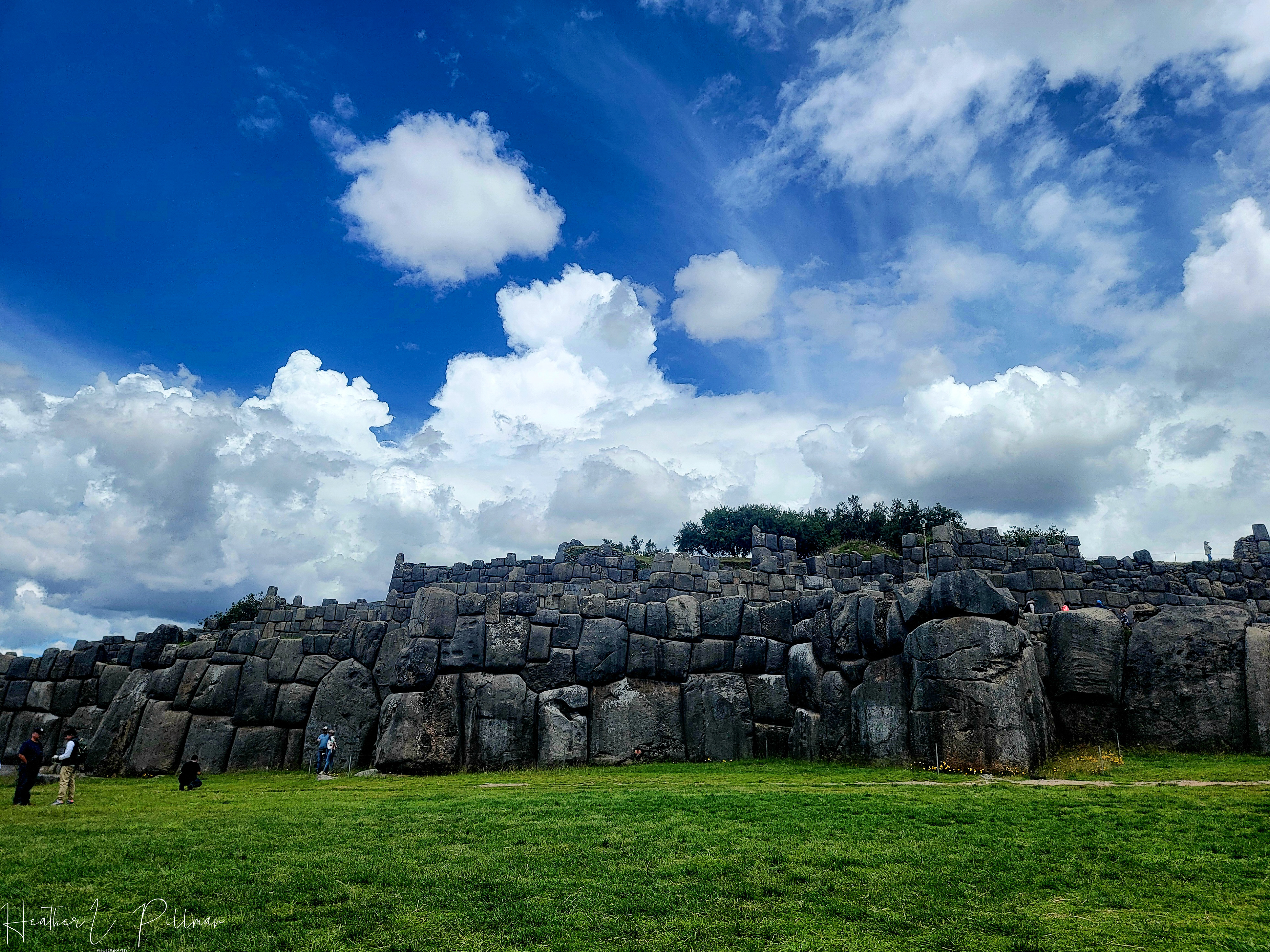
Sacsayhuaman was beautiful and interesting and offered stunning views of old Cusco. While we rode up, we walked down. The path back to the main square of Cusco was steep but pleasant. There are other Incan ruins in this area that are on the Boleto Turistico and there are cabs waiting to take you there.
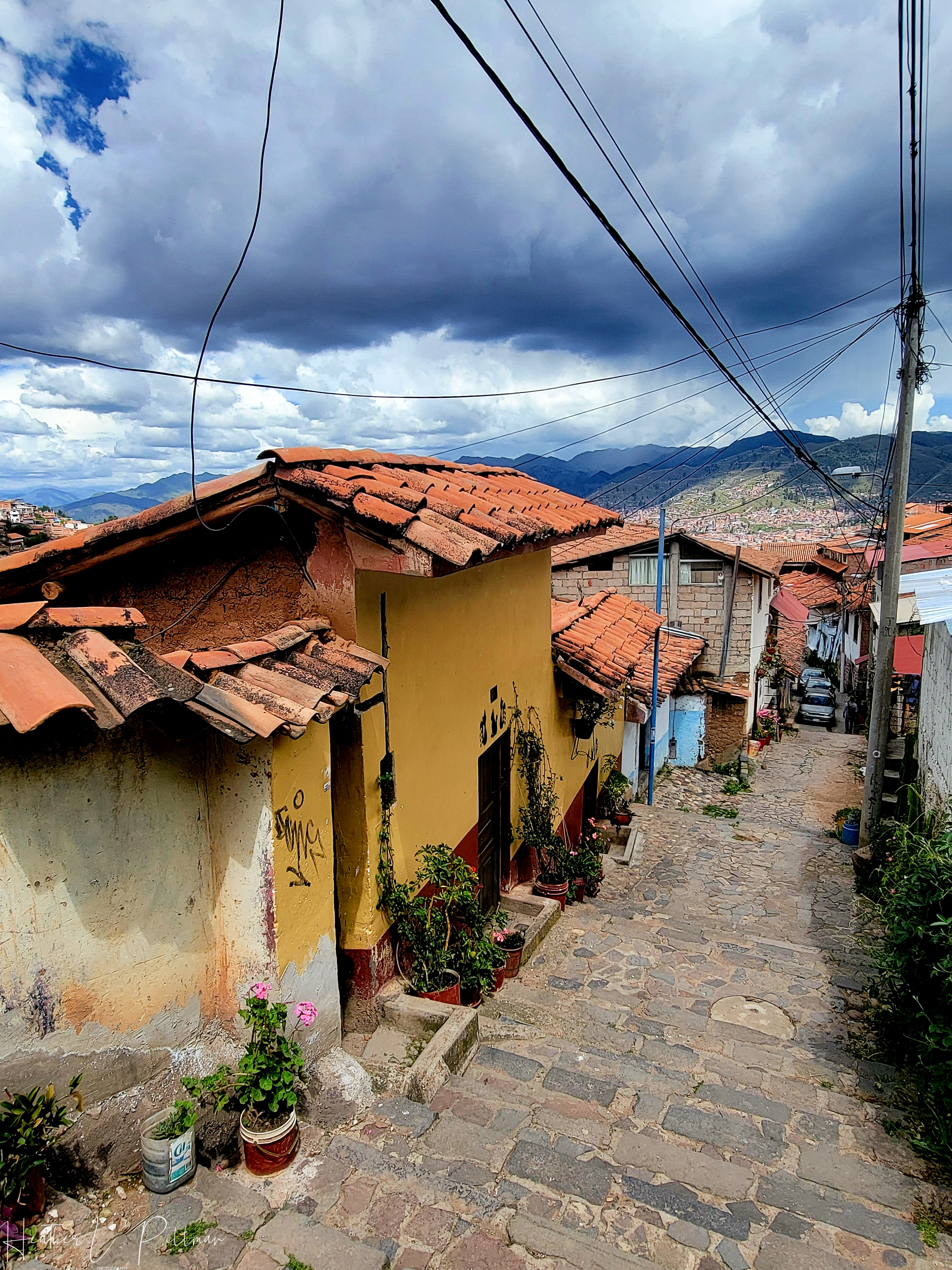
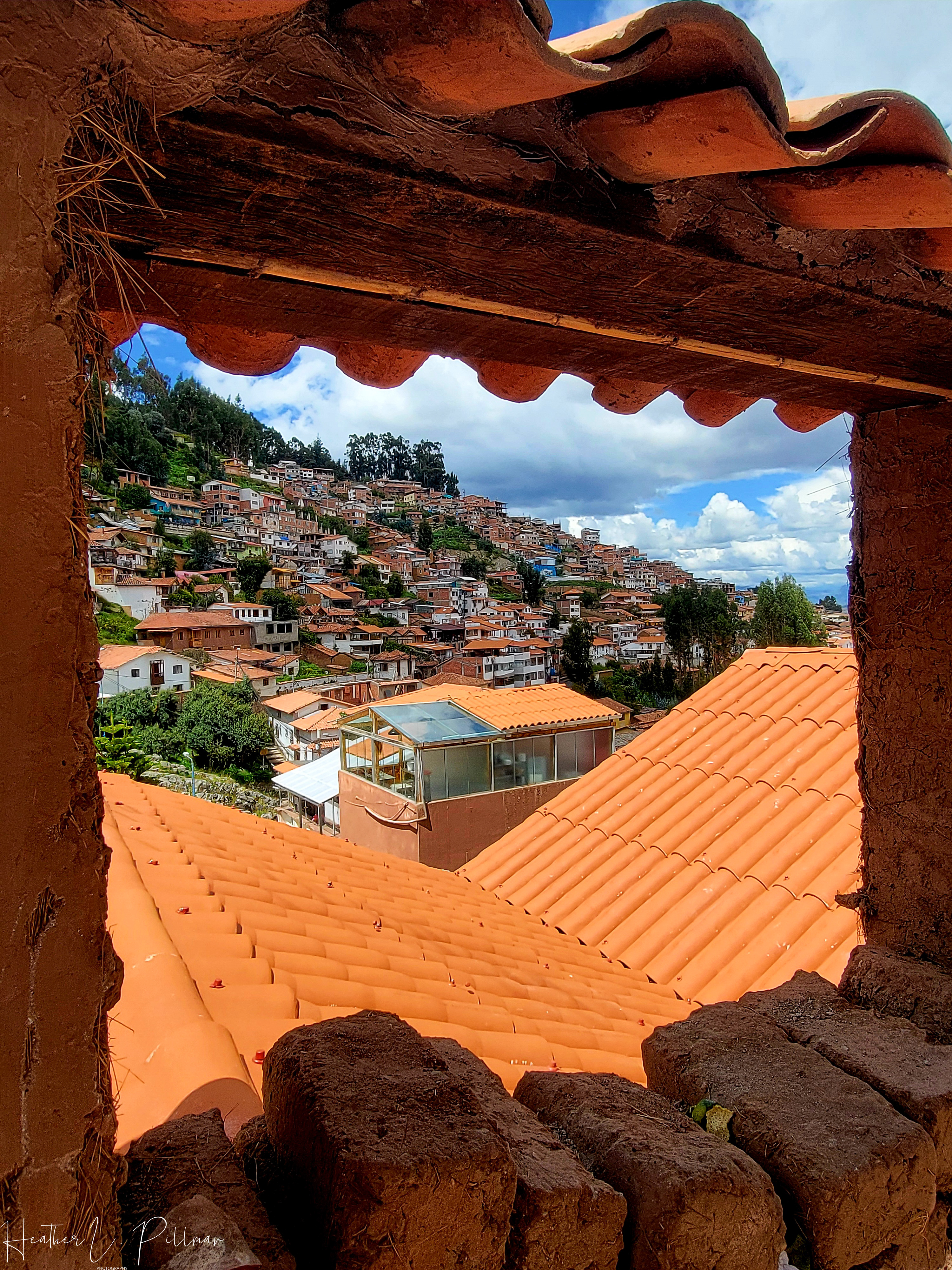
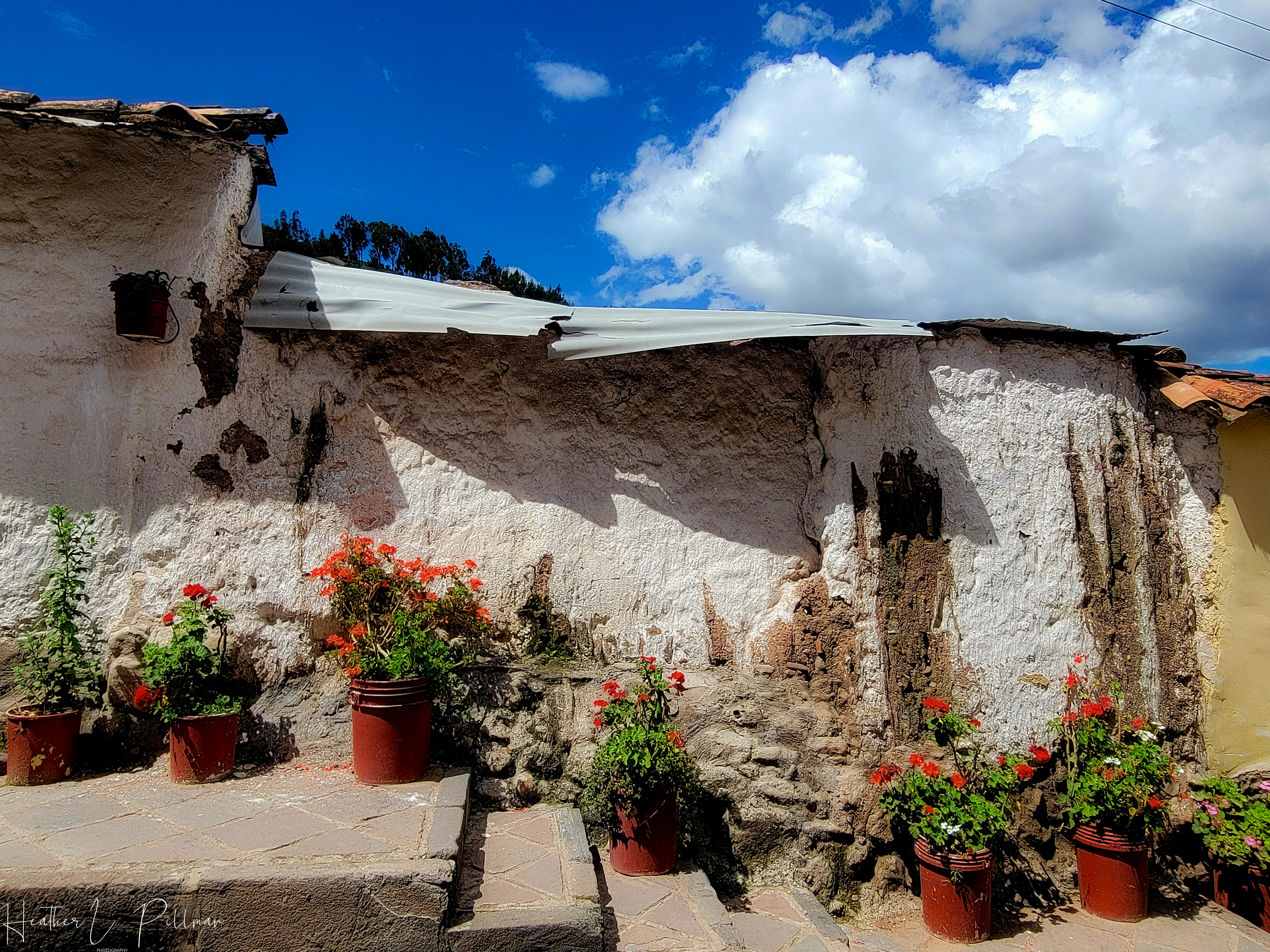
We descended by foot through the charming San Blas neighborhood of Cusco. This area is full of older homes and just oozes charm. The neighborhoods are brightly colored and full of flowering plants. Hands down, it’s the best place to wander in Cusco. I could spend hours here walking and photographing the streets. We stopped for a nice lunch in one of the many small cafes and waited out a thunderstorm before making our way back into the Plaza de Armas.



On our way, we encountered the Procession of the Black Christ or Lord of Tremors. Holy Week is a busy week in Cusco. Peru, as you might imagine, is a very Catholic nation. I felt really lucky that we stumbled upon this procession. This version of the crucified Christ is paraded throughout the city of Cusco, ending back at the Cusco Cathedral where a blessing is given.
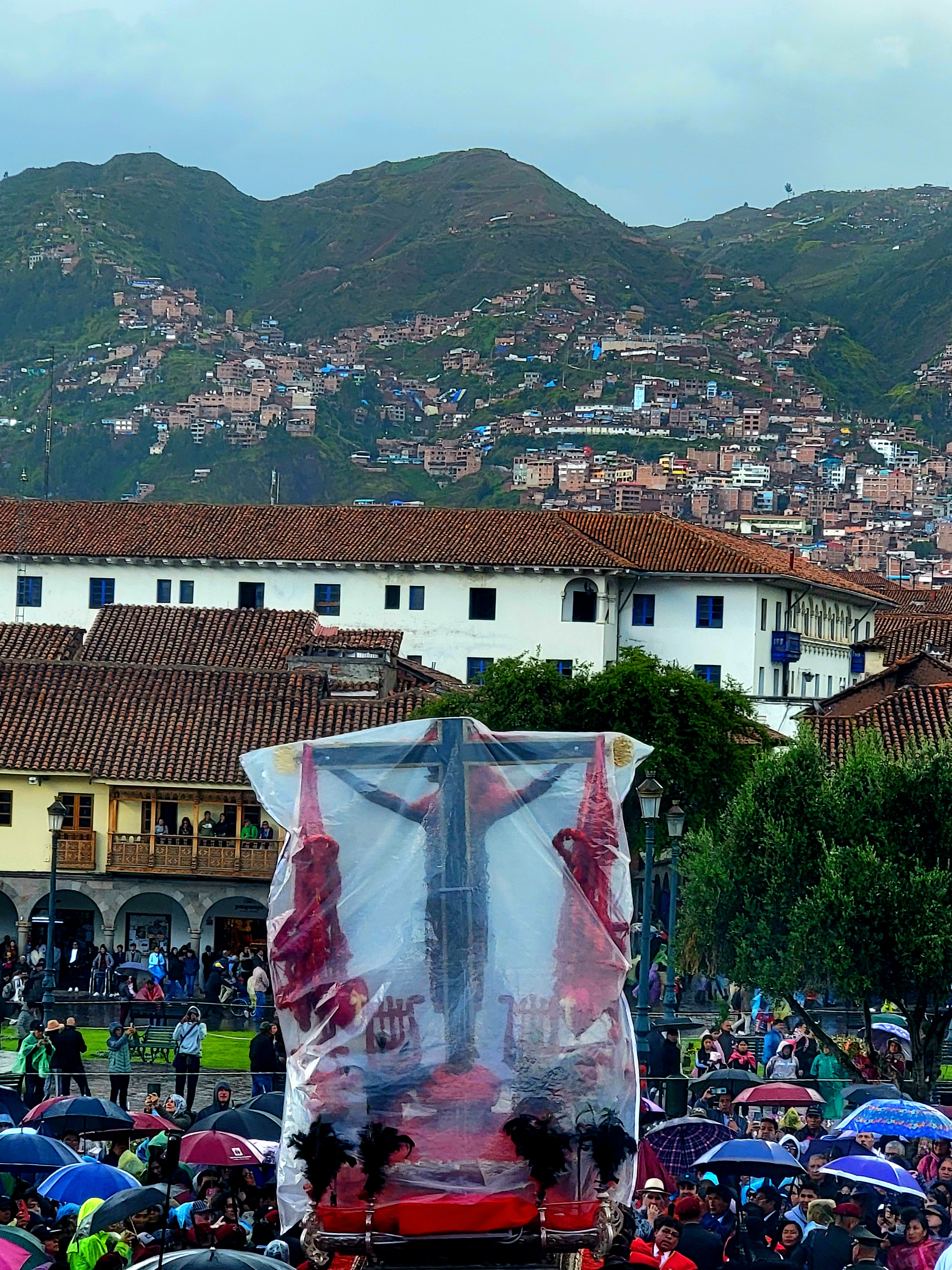
Thousands of people would be in the Plaza de Armas that evening to witness the Lord of Tremors’ return to the Cathedral. (Us included, for a while anyway. Since we’d seen the procession earlier in the day, we pooped out when the Lord of Tremors was behind schedule and opted for a later dinner and early bedtime. We had an early morning planned on Tuesday).
Like many tourists to Peru, Machu Picchu was planned to be the highlight of our trip. You need to arrange both your Machu Picchu entrance tickets and your plan for getting to Machu Picchu several months in advance. Getting to Machu Picchu takes a little bit of work. You can hike the Inca Trail in or you can take a combination of buses and trains to get there. If you’re coming from Cusco, the journey is longer than you think (about 4 hours) mainly because you’ll be riding very slow trains.
The government website for purchasing tickets isn’t great. We ended up checking back several times and emailing the Peruvian government inquiring about when we could buy tickets for March. It turns out that a new ticketing system was being implemented and it caused some issues and a protest. Early in 2024, the train service to Machu Picchu was shut down in protest of the new ticketing system. This caused J and I to go down a small rabbit hole, especially after we found several articles about national protests that ultimately turned out to be from a year ago. At some point we realized that it’s not good to go digging on the internet late at night.
You will have to send information to the government ticketing agency about your trip to Machu Picchu and you will have to have passport in hand to enter the site. We booked our entry tickets first and then set about making our transportation arrangements. Things have changed after COVID. Only 4,000 people per day are allowed in Machu Picchu. You must commit to hiking one of four circuits. We hiked Circuit 2, the longest and most intense circuit (unless you get a ticket to climb some of the surrounding mountains. Circuit 1 is a little less intense or you can take the shorter Circuit 3 or 4.) Once on your circuit, you cannot backtrack on the trail and you only have four hours in the park. We knew we wanted an early entrance time to Machu Picchu, so we decided to take the train to Aguas Calientes, the closest town to Machu Picchu, the night before. Aguas Calientes also has a hot springs and you know how I love a hot springs! We ultimately ended up booking one way tickets with both rail companies simply because the Inca Rail return trips didn’t have a time that suited our day. We purchased an Inca Rail trip to Aguas Calientes and added on a roundtrip bus ticket from Aguas Calientes to Machu Picchu (about a 40 minute ride) and a guide for our trip to the park.
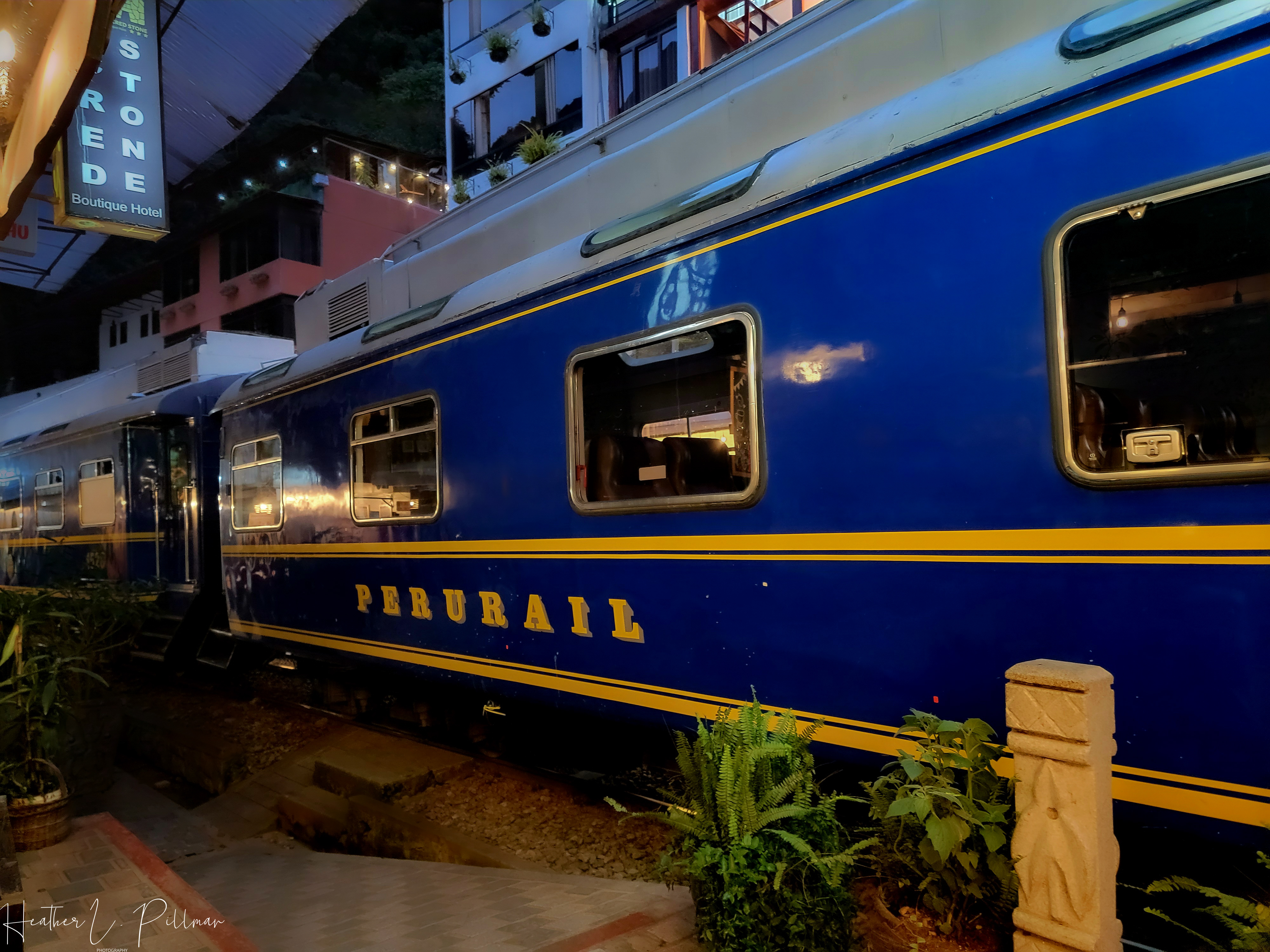
There are two rail companies that run service to Machu Picchu: Inca Rail and Peru Rail. After using both companies, I am team Inca Rail all the way. The trains themselves are very similar, but Inca Rail has it all over Peru Rail when it comes to train station facilities, customer service, and organization.
In the dry season, you can take a train from Cusco right to Aguas Calientes. In the rainy season, you will catch a bus in Cusco. The bus takes you to the town of Ollantaytambo where you’ll catch a train the rest of the way to Aguas Calientes. We left our hotel in Cusco fairly early for a walk to the Inca Rail station. Our bus was scheduled to depart at 9:55 AM. The Inca Rail station in Cusco was great and very well organized. Peru has the whole get tourists to Machu Picchu thing down pat so there is very little room for anyone to be lost or left behind.
Our bus ride to Ollantaytambo went smoothly. J napped; I snapped photos of the countryside out of the bus window. Inca Rail’s buses were smaller sprinter vans and there were probably 12-15 tourists in the bus along with a driver (duh) and two other representatives from Inca Rail tasked with getting us all where we needed to be. The Peruvian countryside is beautiful, full of small villages and farms. Small houses topped with two bulls and a cross flashed by. You’ll see these bulls all over. They are purchased by godparents when a new family home is established and are mounted on the roof . The tradition is said to bring prosperity to the family. Prior to the arrival of the Spanish, llamas without a cross, were fixed atop the roofs.
We arrived at the train station in Ollantaytambo right on time. Inca Rail has a great space with clean restrooms, plenty of seating and a snack bar. There is also a tv running a promotional video featuring a pan flute song that plays ad nauseum. Fun fact, the same pan flute song will play on the train and I still have it stuck in my head. As our scheduled train departure time passed us by, it was obvious that something was holding up our train: floods and landslides. March is the tail end of the rainy season, remember. After a few hours of pan flute music, we were finally taken to our train which is a short walk from the Inca Rail waiting room.


The train from Ollantaytambo to Aguas Calientes is about an hour and a half ride. There are some planned stops in a few villages and the train is not fast moving, but the views out the windows are phenomenal. We booked an upgraded ticket in a car that had windows throughout, including on the roof of the train. Our upgraded ticket also got us a bag of Inca chips and a very melodramatic reenactment of the love between an Incan general, Ollantay, and a princess. We could have lived without this part of the ride.
We disembarked in Aguas Calientes and immediately saw the damage from the floods and landslides. The rivers and streams were moving really high and fast and it was still raining. None of the locals seemed bothered and we made our way on foot to the hotel. Aguas Calientes is very small, very walkable and the town exists almost solely as part of a symbiotic relationship with Machu Picchu. You will find hotels and restaurants aplenty. We stayed at the Sacred Stone Boutique Hotel and it was fine. Nice, clean, safe and cheap. I think our rate was $18.97 a night. I ended up with a nice corner room overlooking the Urubamba River which provided me with a good deal of fantastic white noise to sleep to. J’s room was a bit more simple, but his ‘Hobbit hovel’ sufficed for the night. We had a quick dinner next door and then met with our Machu Picchu guide. (Sadly, we didn’t have time to get to the hot springs before it closed and to be fair, given the inclement weather, we don’t know that it was even open).
We woke up early as our guide wanted to meet at 7:00 AM to get in line for our 8:00 AM bus departure. We thought he was crazy until we saw the lines of people in their colorful jackets and rain ponchos queued up for the buses.
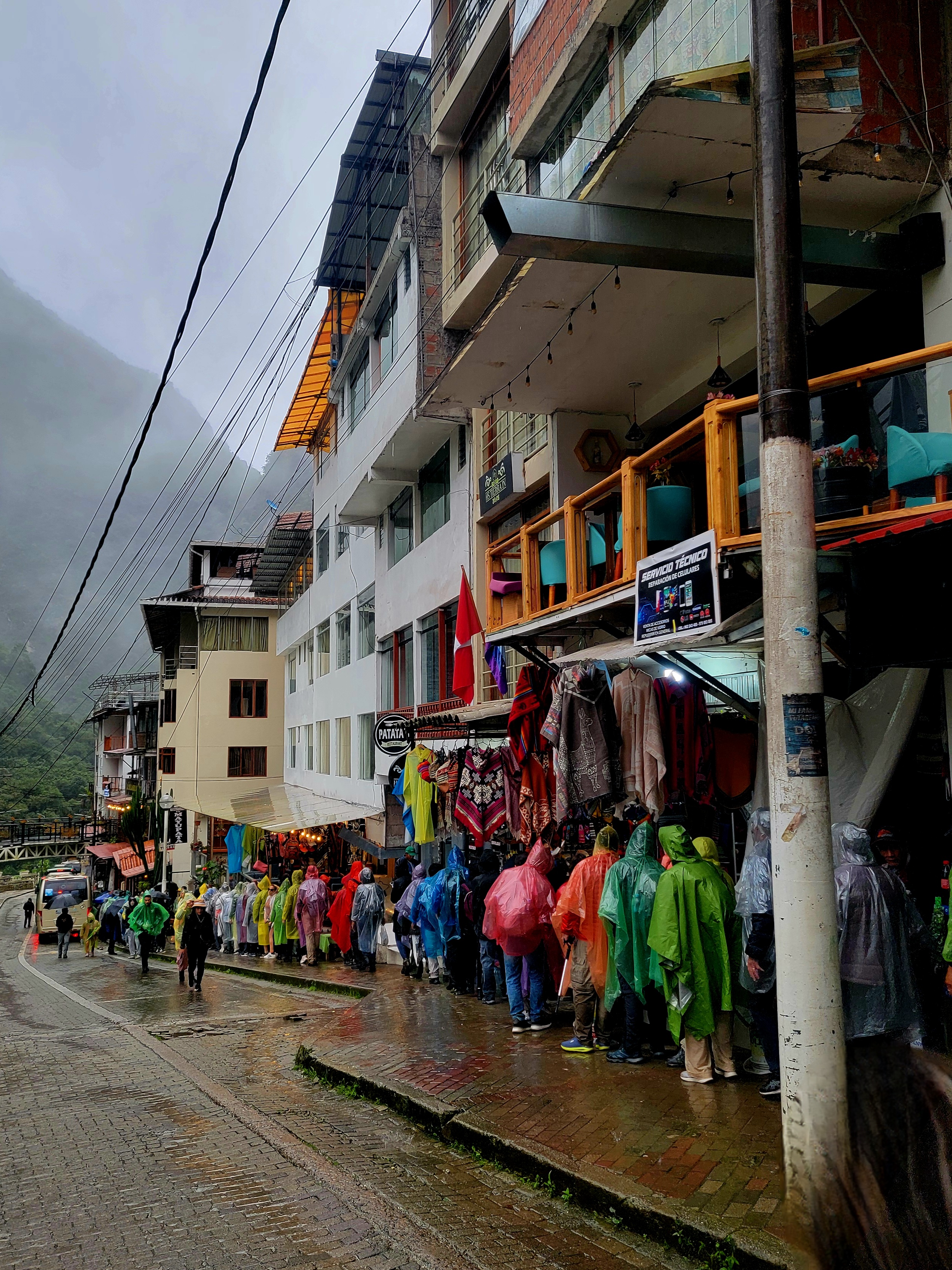
The only day we experienced hard and ongoing rain in Peru was the morning we decided to go to Machu Picchu. The rain was so hard and steady that it soaked through our rain gear, but before 8:00 AM, thanks to our guide’s foresight, we on the bus, up a very windy and narrow road to Machu Picchu. We had only one stop to let a car sick tourist vomit out the bus door and we were at the entrance gate right at 8:00 AM. (Note: if you need to potty, Machu Picchu has very nice, clean bathrooms stocked with TP. It’ll cost you 2 Soles to get in).
Here is a thing you need to know about the Incas. Everything they built is on a mountainside and all of the ruins contain some uneven and very steep stairs. I am definitely not in my best shape right now and our guide really took his time with us and made sure we had time to rest when we needed to (mostly to suck some air into our lungs). Machu Picchu is at about 7,900 feet. I felt substantially better about obtaining oxygen here, but you can still feel the altitude when climbing a million stairs.
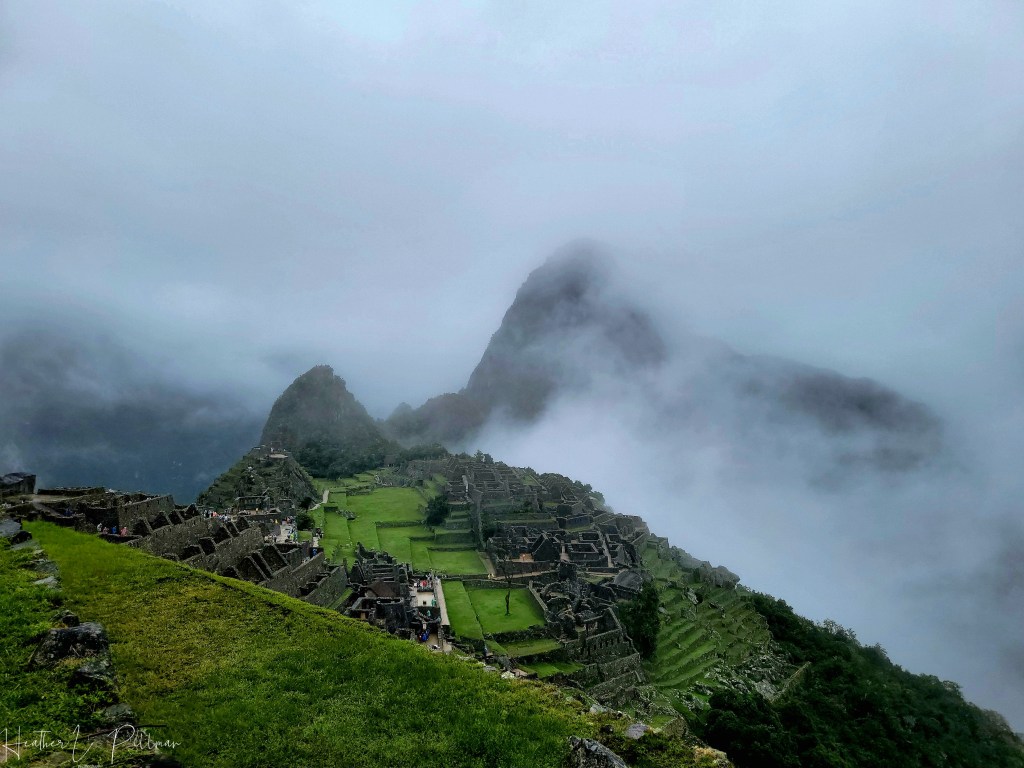
The rain stopped a few minutes into our visit and the fog set in. It parted long enough for us to get some great views and great photos of Machu Picchu. I thought the fog added a mysterious ambiance that went well with our visit. We were immediately glad that we had hired a guide as he knew the good photo spots and gave us information that we’d likely not have known about if we wandered on our own.
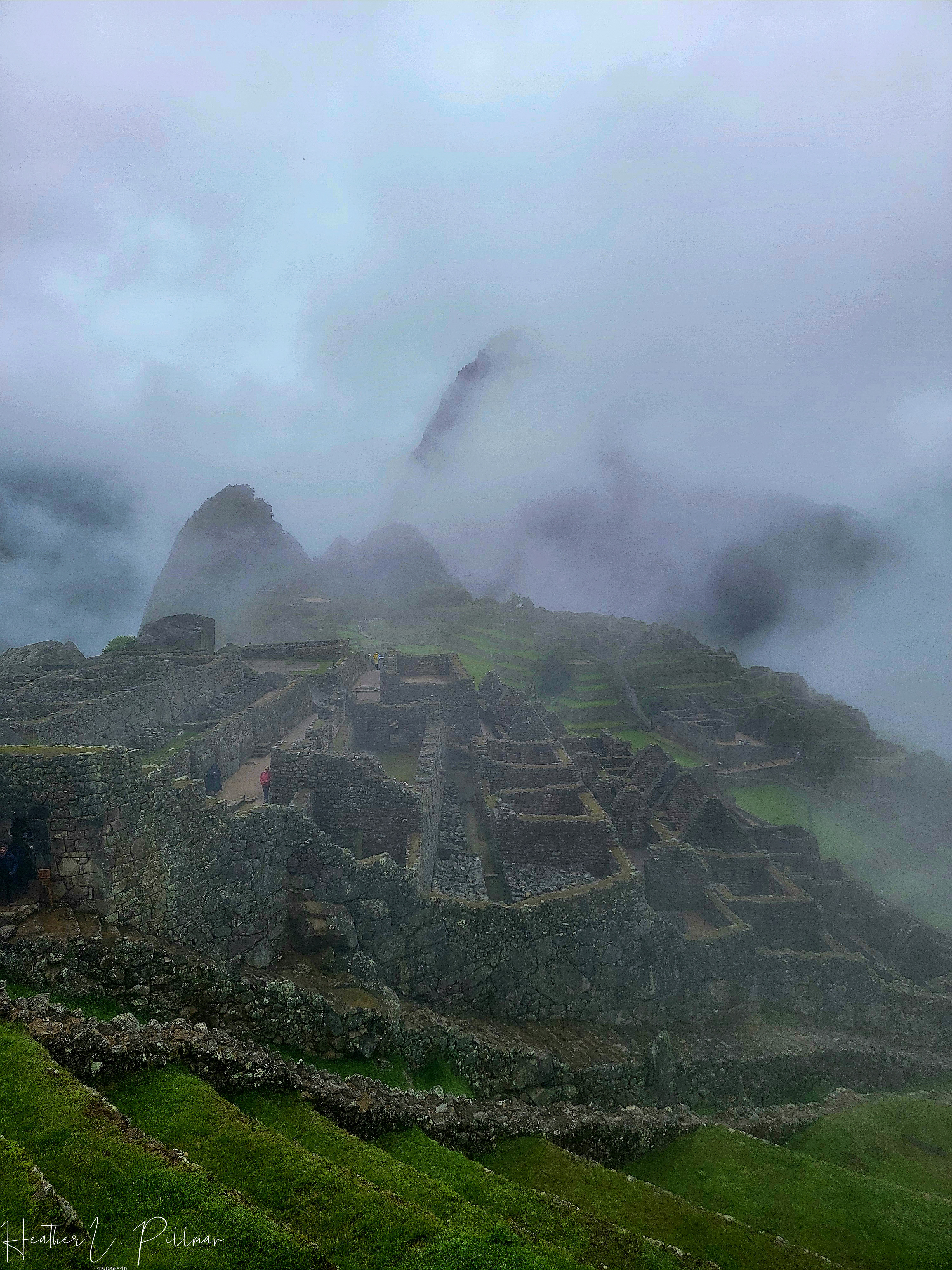
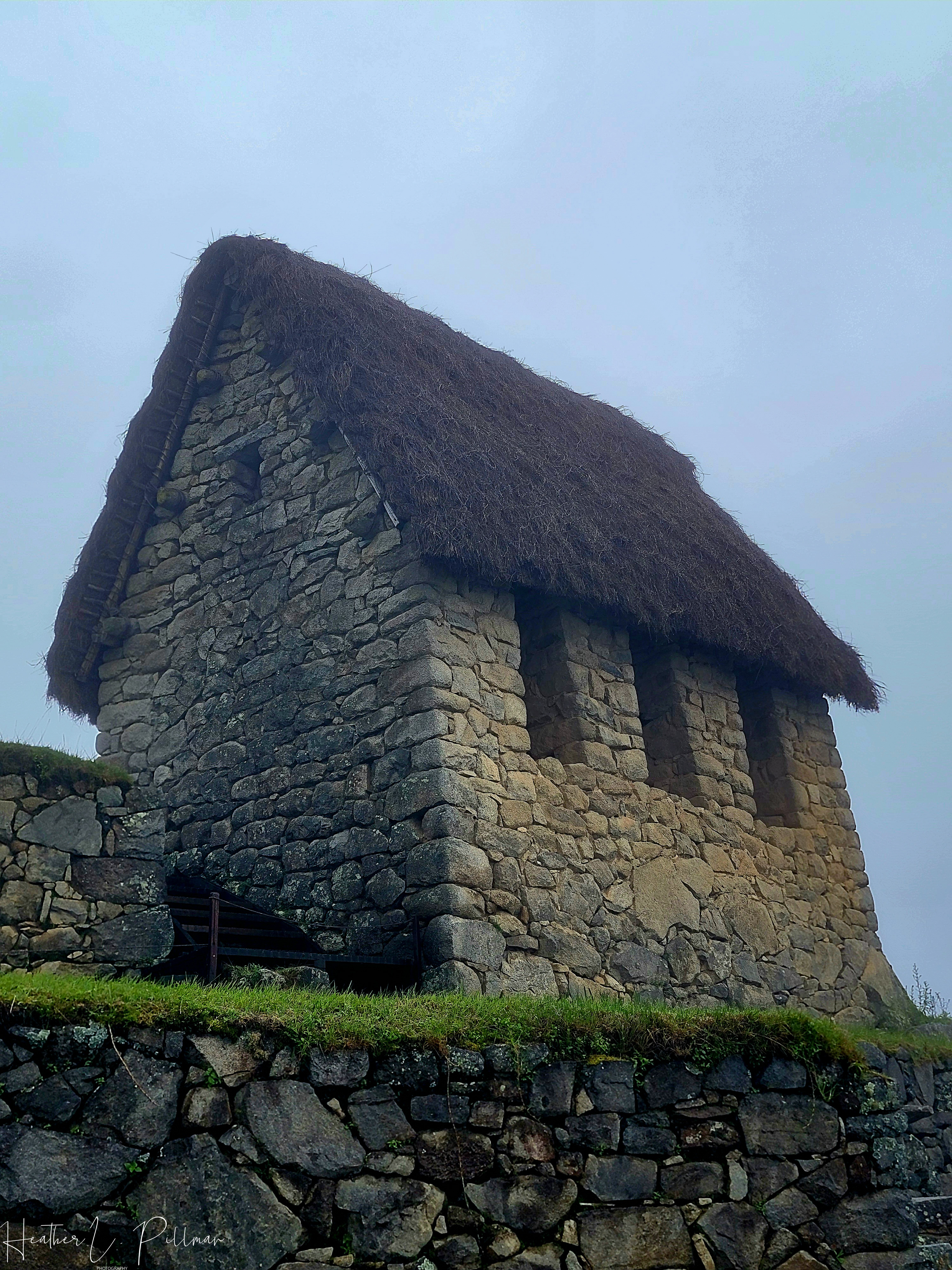
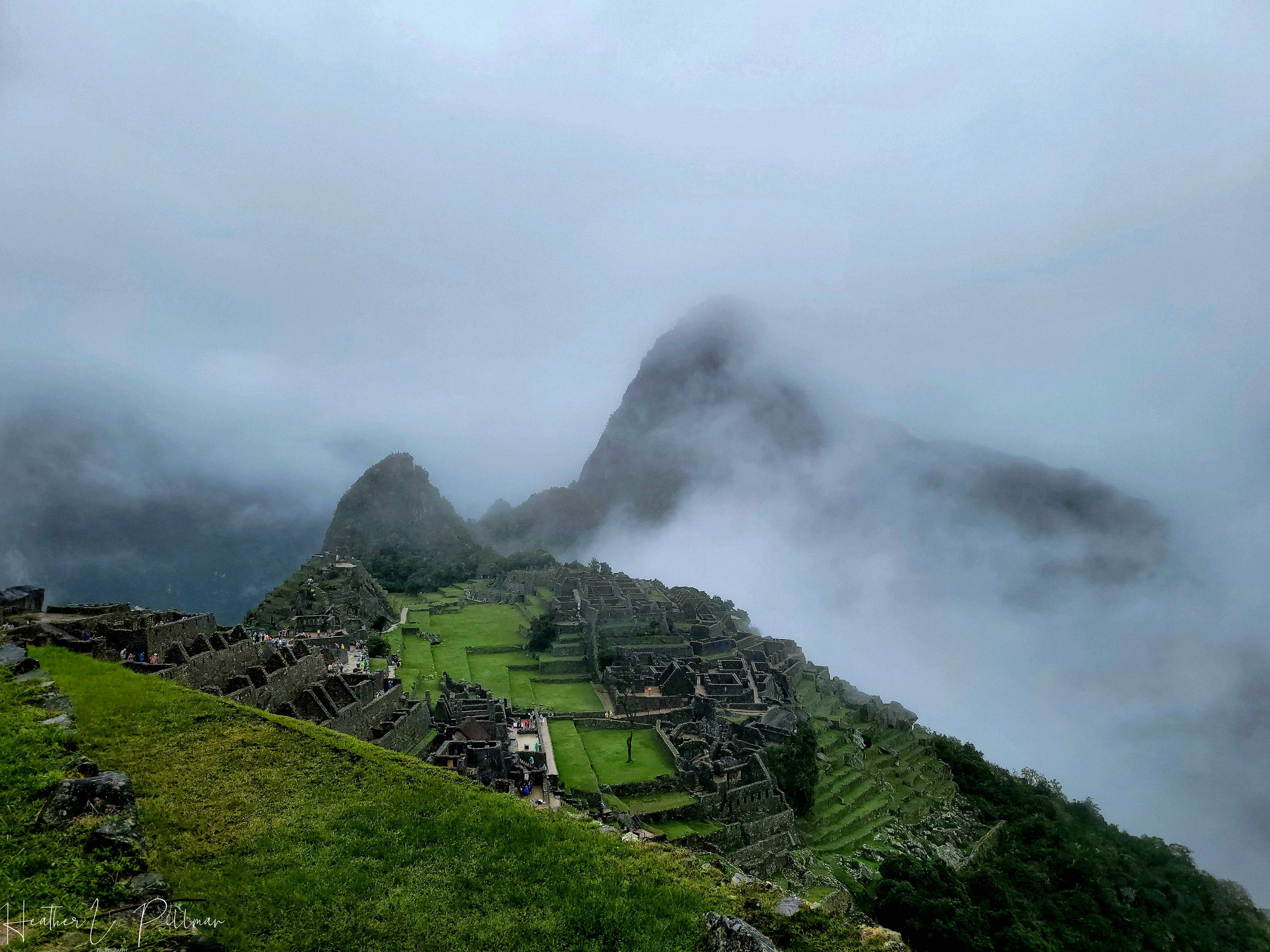
Machu Picchu itself is mysterious. The Spanish never found this city nestled in the mountains. People lived here, of course, and it’s thought that maybe Machu Picchu was some kind of summer resort for Incan royalty. The city is built in levels, with the common people living below and the higher class people living above. The Inca founded the city through a process of negotiation with other tribes of people living in the surrounding jungles. They added terraces and began farming. Controlling the food is a good way to control the empire. We have no idea what the Inca called this city. The name Machu Picchu comes from one of the nearby mountains. The Inca abandoned Machu Picchu and no one really knows why, perhaps from fear of approaching Spaniards or maybe disease. In any case, the people living here probably made their way to Vilcabamba, the last Inca city.
The jungle reclaimed Machu Picchu until in 1911, American Hiram Bingham “discovered” it. In true white dude fashion, Bingham was looking for the Lost City of the Incas, likely Vilcabamba and found Machu Picchu instead when he encountered a young man who took him there. There were two families still living in the overgrown city when Bingham arrived. We do owe a lot of what we know about this place to Bingham as he took many photographs and took many artifacts back to Yale University.
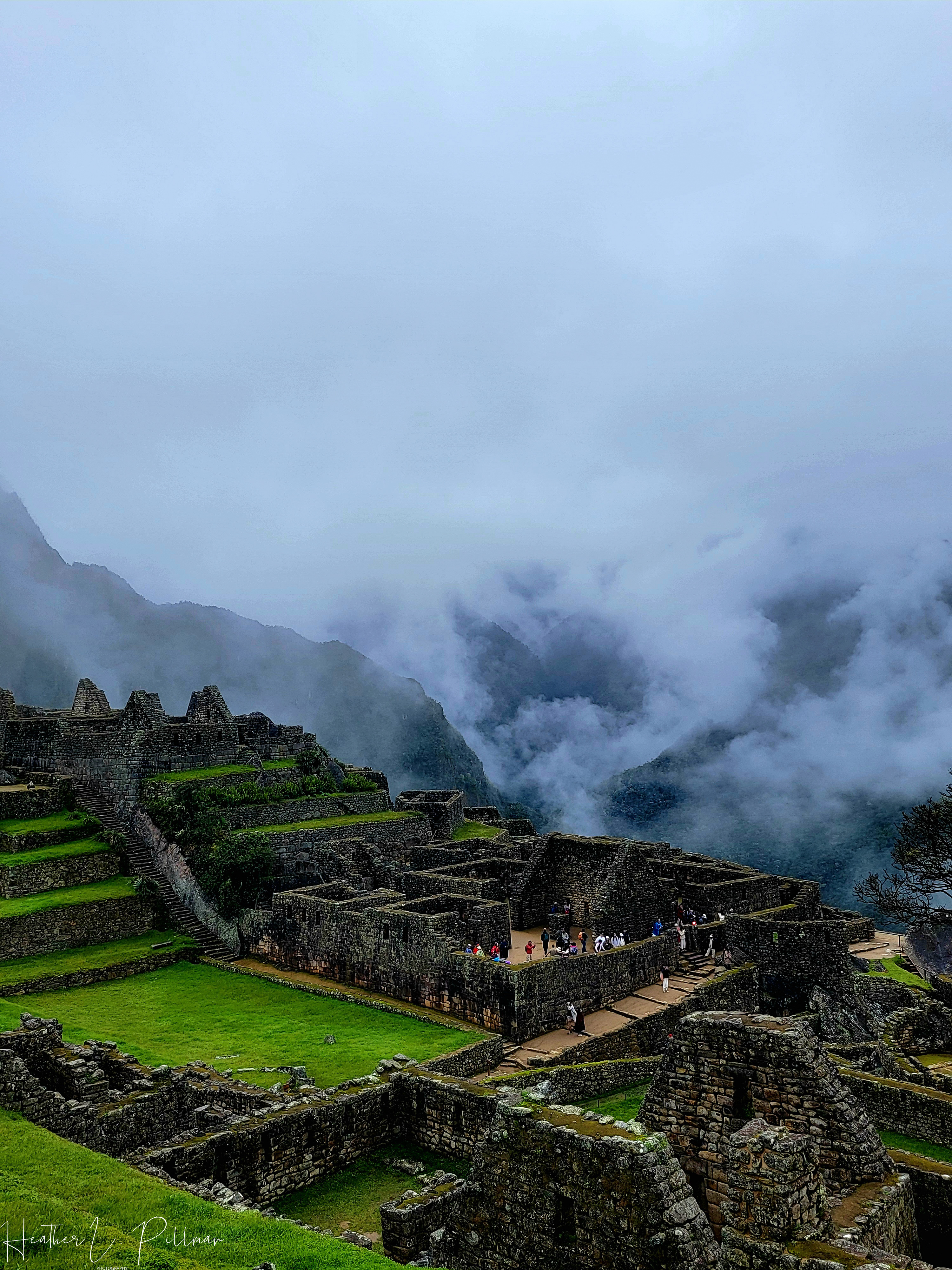
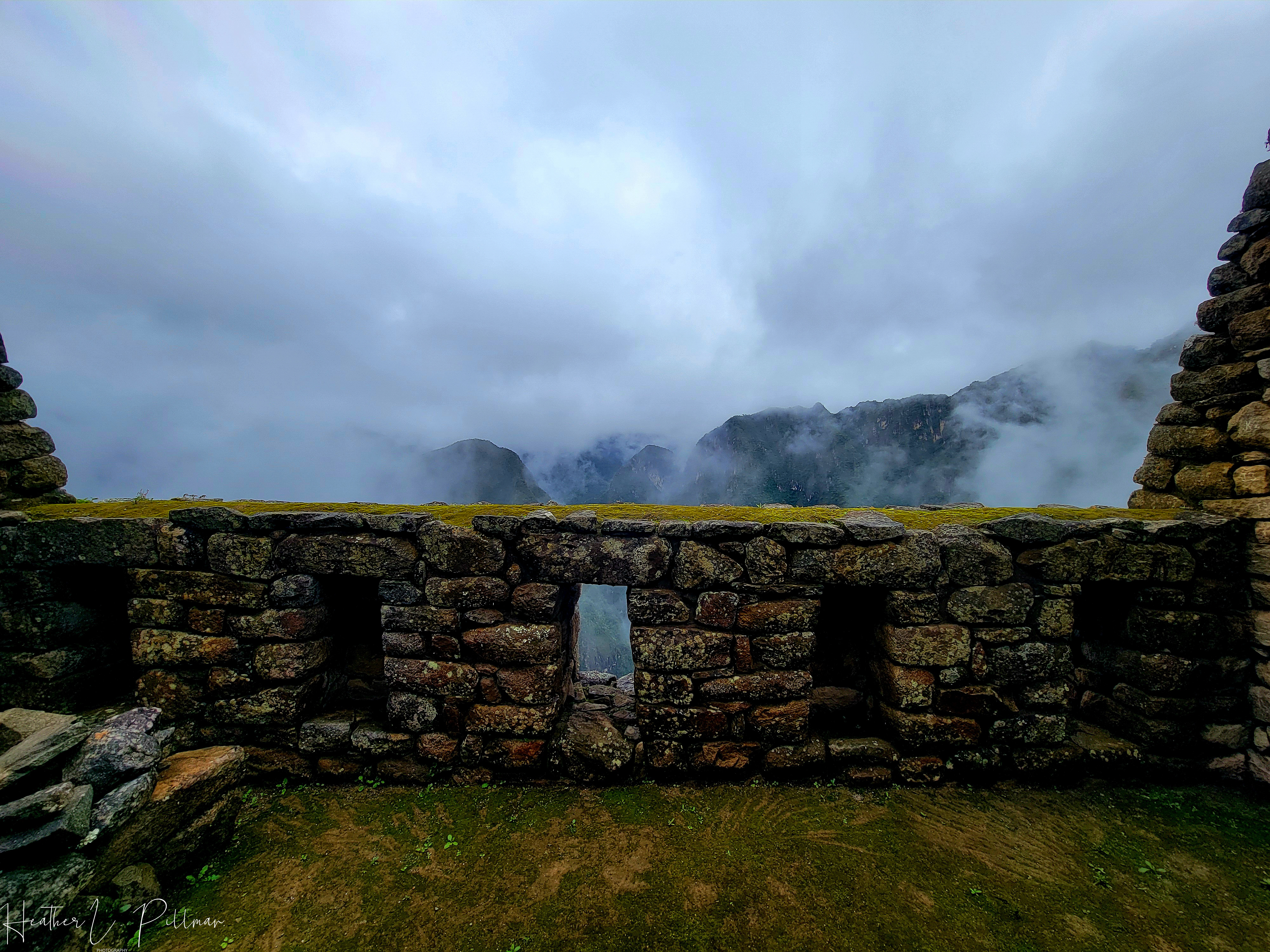
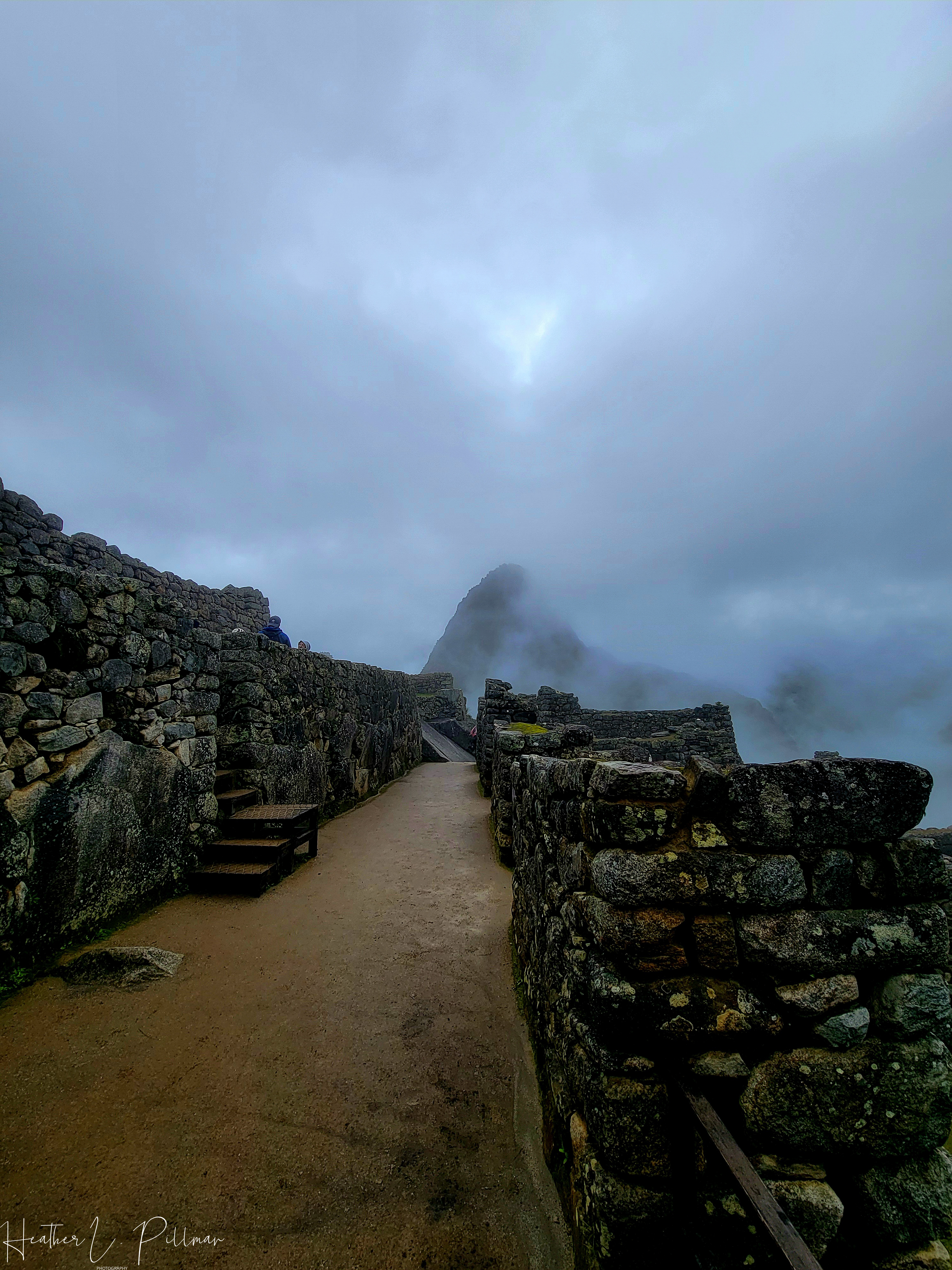
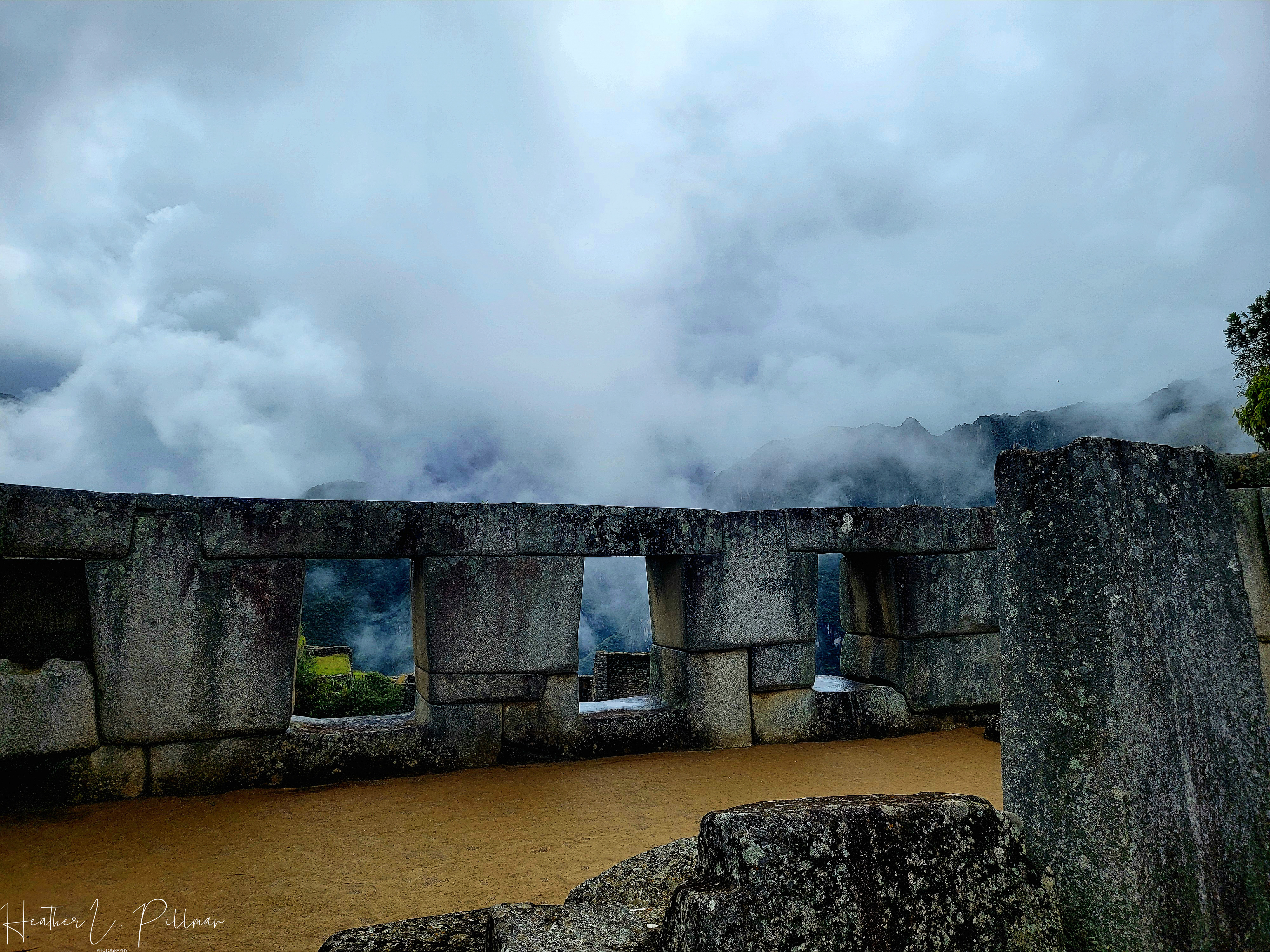
Machu Picchu should not be missed if you have the good fortune to make it to Peru. It is simply spectacular. I’m still mind boggled by how the Inca moved all of these giant hunks of granite into place. Machu Picchu is a UNESCO site. Unfortunately, it is starting to sink. You can see some of the tightly constructed walls sinking into the earth and coming apart. Machu Picchu will not be rebuilt as it falls.
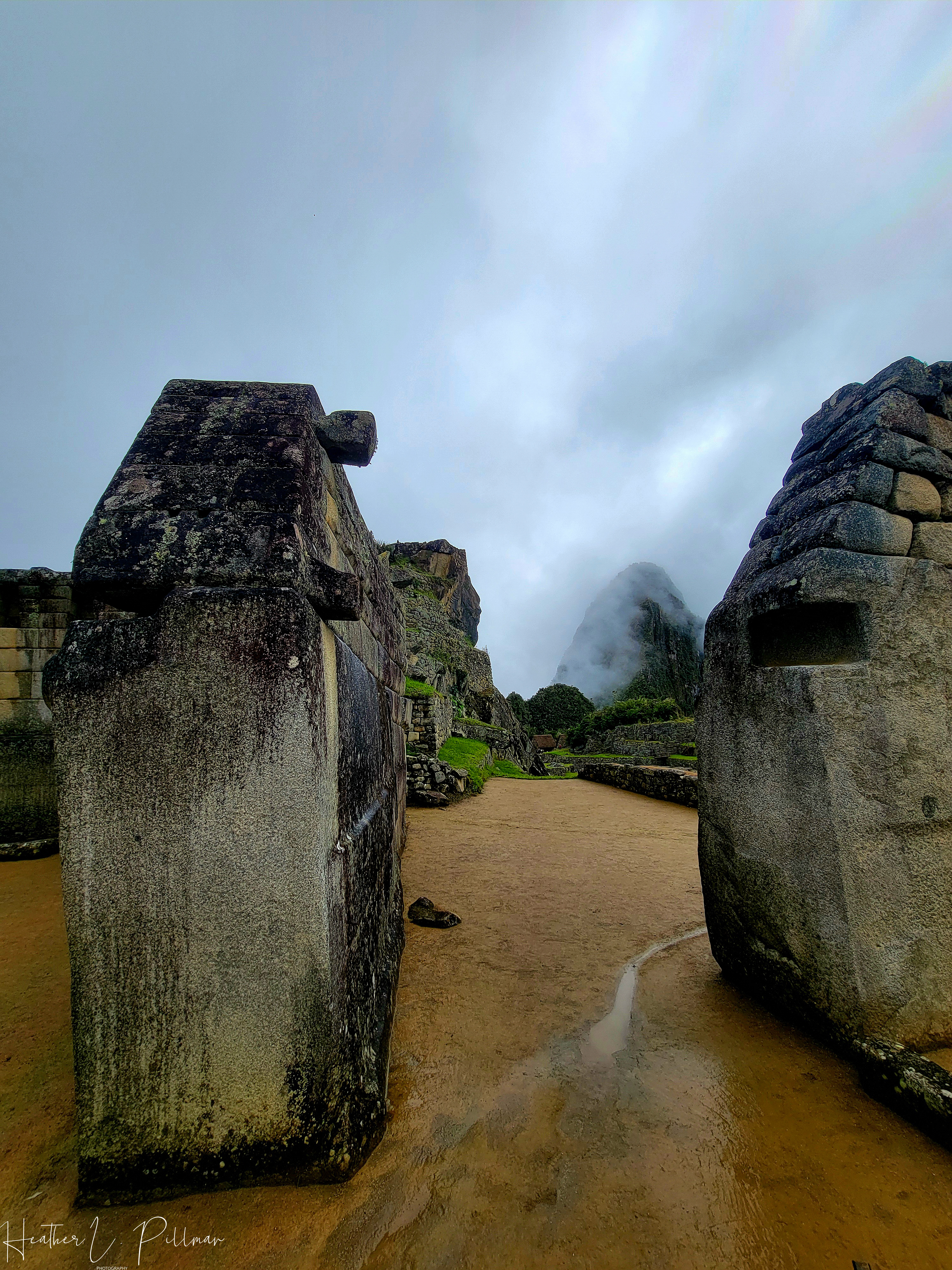

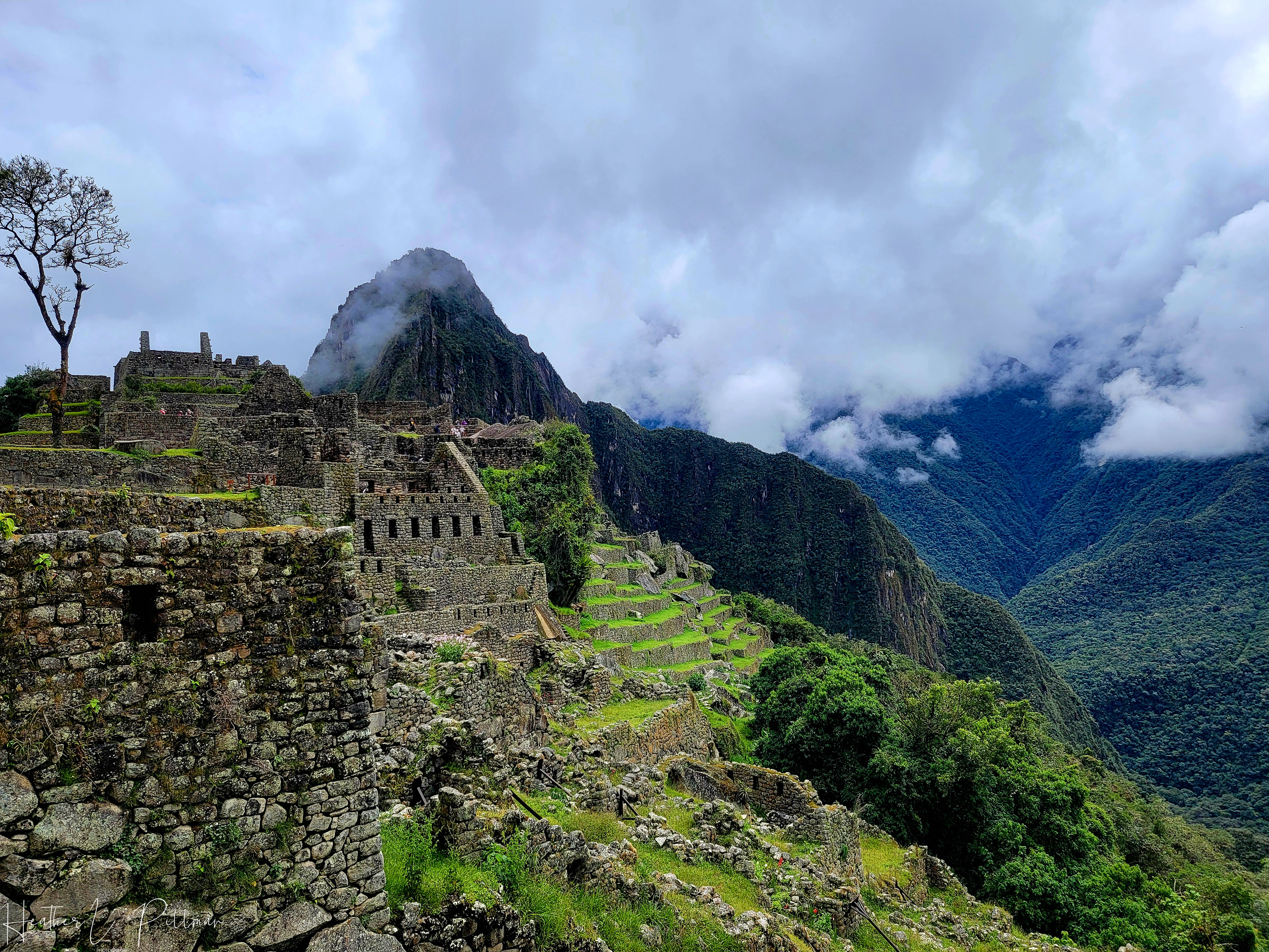
We had time for a nice lunch and a stroll around Aguas Calientes before we made our way to the train station and endured the most disorganized and chaotic Peru Rail train boarding process. I can’t even talk about it; it was bonkers and there was no need for it to be so crazy. And then, we went back the way we came up. We arrived on a slow moving train in Ollantaytambo, we were loaded onto a very large bus where 10 of the 40 people on board immediately had to go pee pee as soon as the bus was ready to depart, we arrived back in Cusco and took a cab to our hotel because we were tired of climbing uphill already.
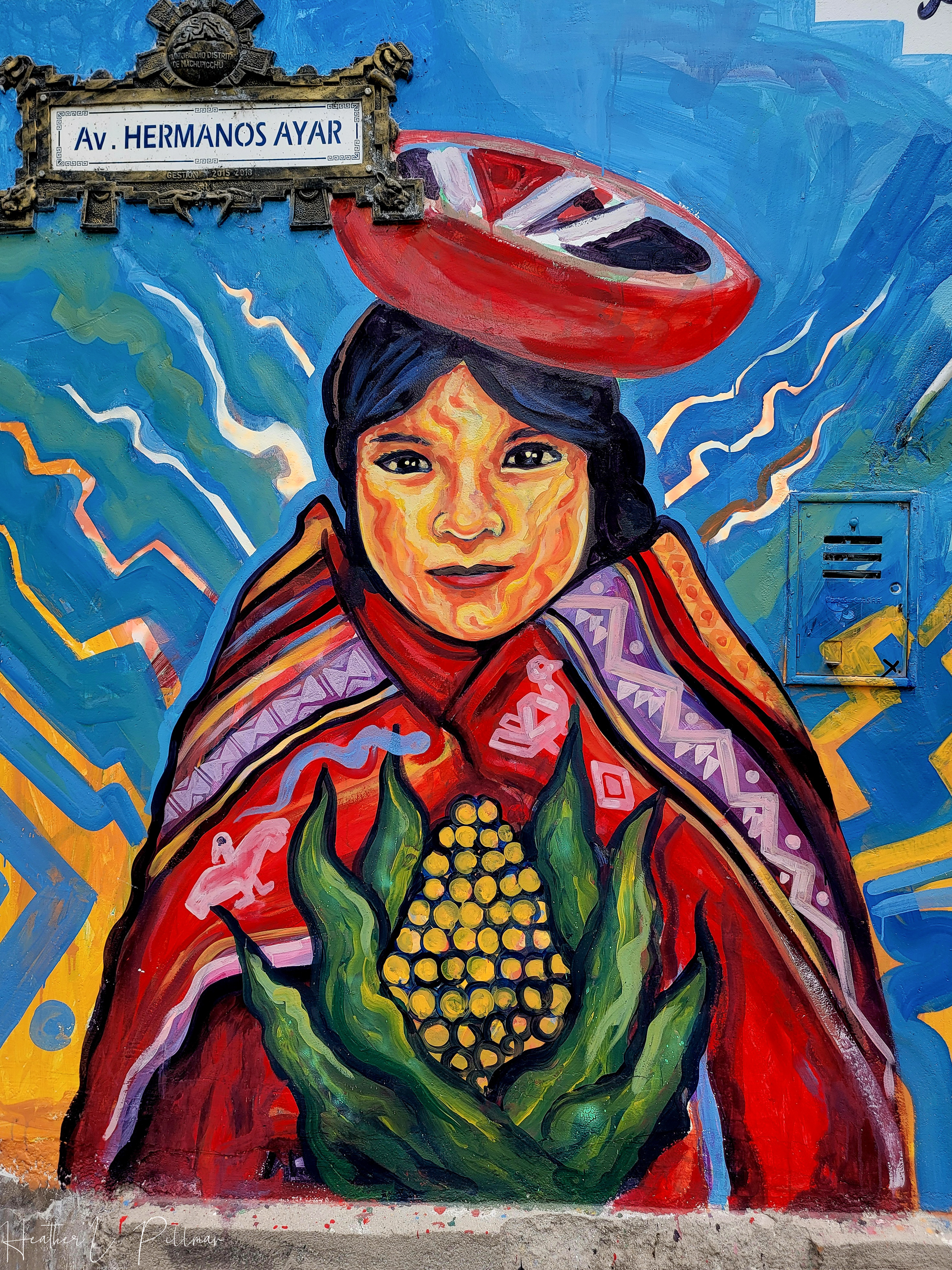
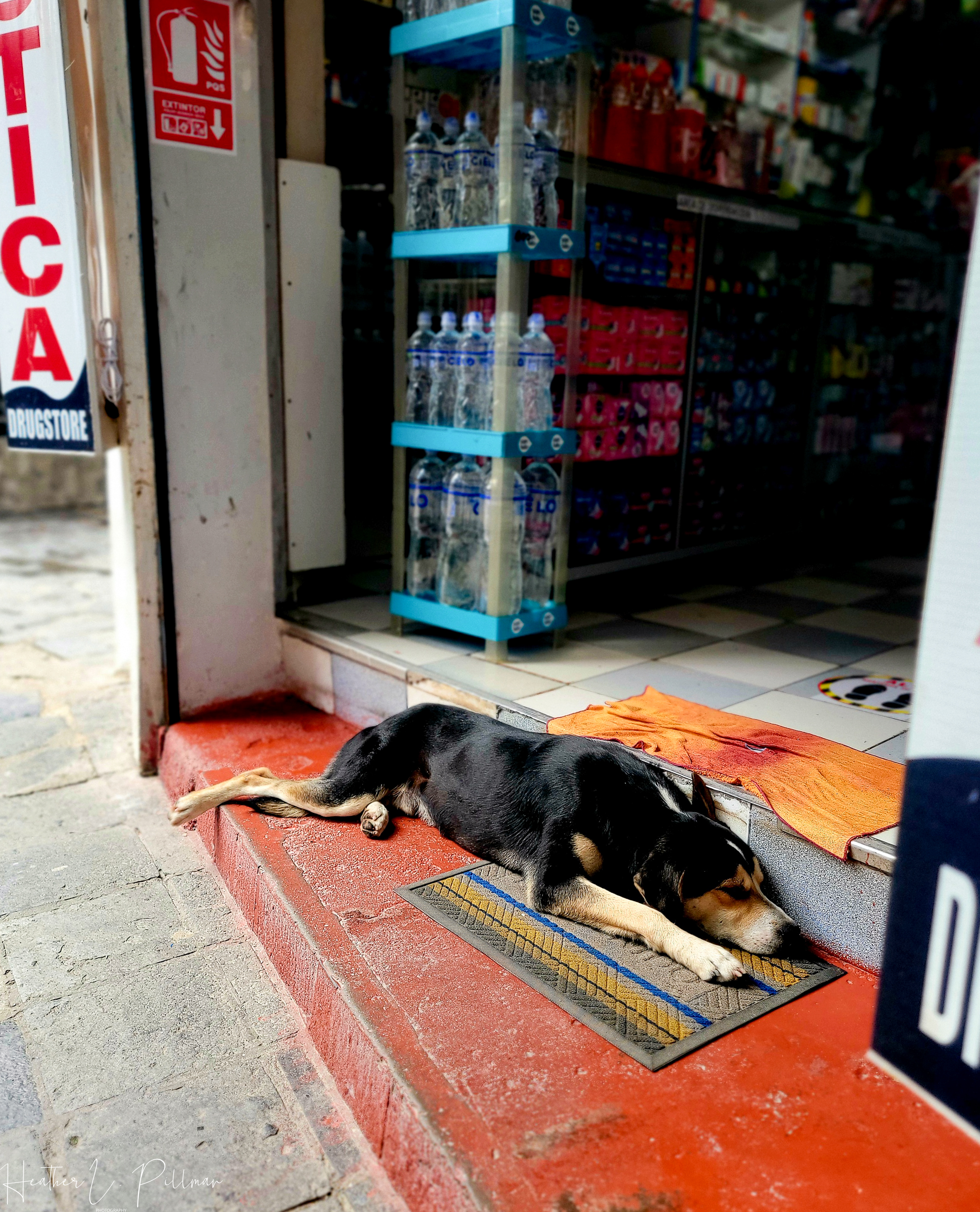
There are other ruins in Peru’s Sacred Valley that we wanted to see. We booked a private tour with Tours By Locals. Hiring a private tour guide or driver is very affordable in Peru. We became acquainted with Yarik on the Tours By Locals website and he was able to create an itinerary for us that included the additional things we wanted to see. We were picked up at our hotel and made our way out of the city. Cusco is always busy. People and dogs were running about. Vendors were attempting to flag motorists down to buy bread by waving yellow bags. Pan chuta is a regional specialty and Cusqueños on their way to visit family in Lima will stop to pick up this traditional bread and some cheese.
Our first stop of the day was my Peruvian obsession: the Salt Mines at Maras. I had seen photos of this place online and it was so incredible that I knew we had to go. The mines have been in operation since pre-Hispanic times and are another UNESCO site. Very simply put, the mines work this way: a naturally saline stream is routed through a series of clay pools. When the pools dry in the dry season, the salt from the stream is left behind and is harvested and bagged up for sale. The salt mines work almost like a co-op where families purchase several pools and everyone works collaboratively to harvest the salt, repair the pools, and so on. This reciprocal work agreement, we were told, has been the way of working in Peru since the time of the Inca. The pools were so interesting and made for some great photos. You can also buy Cusco chocolates here and salt, of course. They had a chicha stand. J took a sip of chicha, a fermented corn drink, and I finished my glass and his.
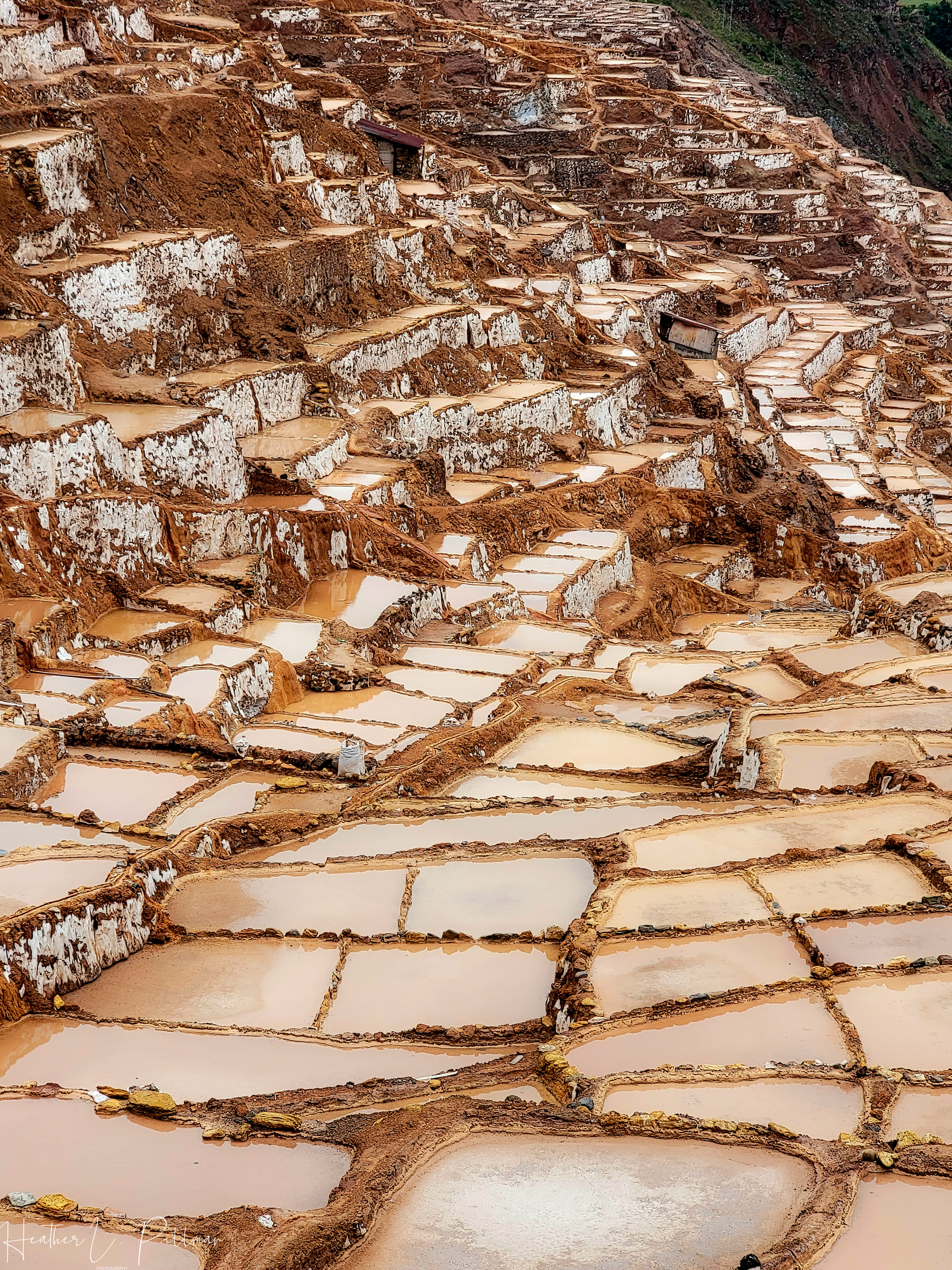
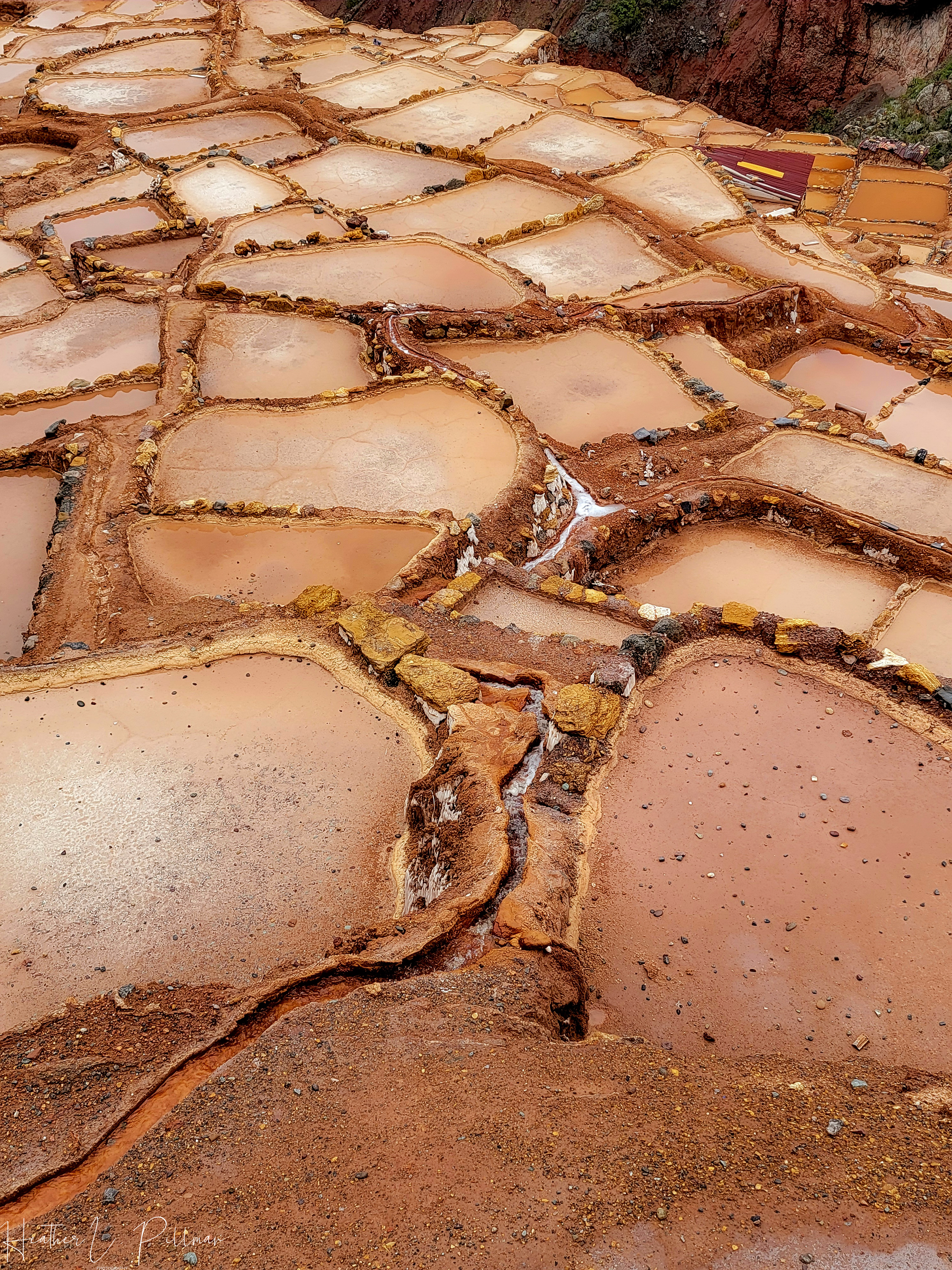
As we made our way from Maras to our next stop of Moray, Yarik pointed out several homes that had broomsticks covered in red bags extending from the front doors. This indicated that a chicha bar is open. Chicha bars aren’t like American bars. Chicha bars are in traditional homes, usually run by an older woman and usually where guinea pigs are being raised. Here you can drink some chicha, get a meal cooked for you (maybe one of the guinea pigs), indulge in town gossip, get counseling, and even get a hook up for a job. (Side note: guinea pigs are indigenous to Peru and were one of the first domesticated animals here, along with llamas and alpacas. They are raised for food. Peruvians eat cuy on special occasions.)
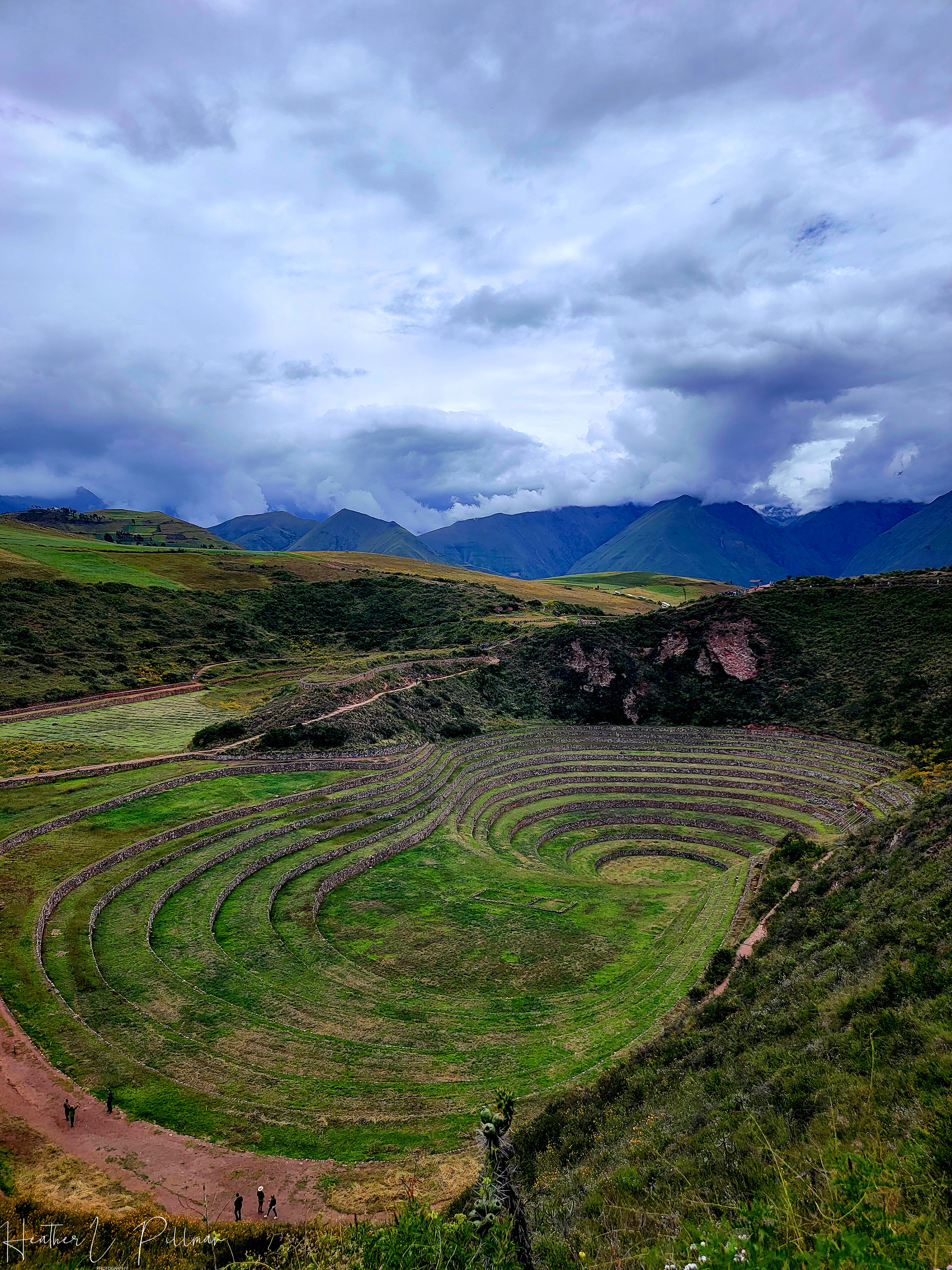
Our next stop was Moray. The ruins here are an Incan agricultural center. In this extraoridnary landscape, the Inca used natural depressions in the earth to build what I would call test gardens. Over the course of several planting seasons, crops would be planted at higher and higher (or lower and lower) terraces allowing for crops, eventually, to grow at altitudes other than those where they were originally found. This is how the modern day potato in Peru can be grown at higher elevations; the same with chile peppers. It’s fascinating to think about how this capacity to modify crops existed in Incan times and it reminds us that the civilizations in the Americas were just as or more advanced than the civilizations in Europe at the time. (There is a great book called 1491 if you are interested in this particular topic.)

A quick stop for lunch to a buffet restaurant, clearly designed for tourists. It was here that I tried cuy. Yes, I ate guinea pig. I figured since we were at a buffet where I could get a taste and not have to commit to eating a whole one, it was now or never. It wasn’t bad. The meat is pretty mild with a chicken-like texture. There are a lot of bones and I think maybe how good cuy is has to do with how good the sauce on the meat is.
Our last stop of the day was Ollantaytambo. We’d already been here to catch the train but the purpose of today’s visit was to see (and climb) another Inca ruin. Ollantaytambo is known as the prettiest town in Peru’s Sacred Valley and once you get off of the busy main street, you can see why. Incan architecture still exists here in many places and it’s a lovely town. We stopped in to visit a traditional home, complete with guinea pigs, admired the watering troughs built for llamas and alpacas being brought through town, shopped and visited with two women in bright Peruvian clothing (Colorful clothing was not the traditional clothing of the people of Peru. This is another remnant of Spanish colonization. Conquered people were forced to wear the colorful clothing as it made them easier to spot if they attempted escape.) and then made our way to the entrance for the ruins of the Inca fortress here. Ollantaytambo is on the Boleto Turistico or you can buy tickets just for this site.
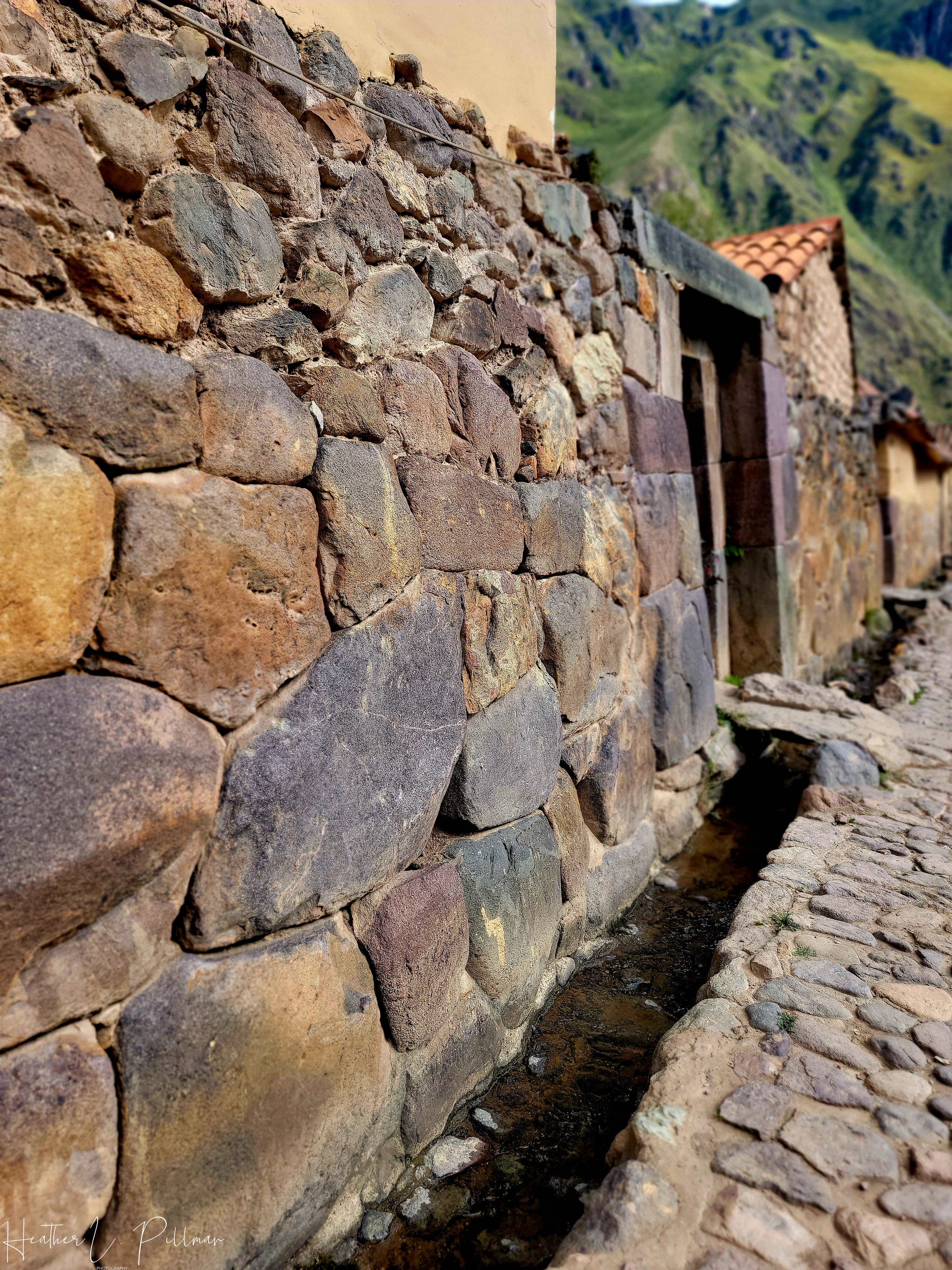
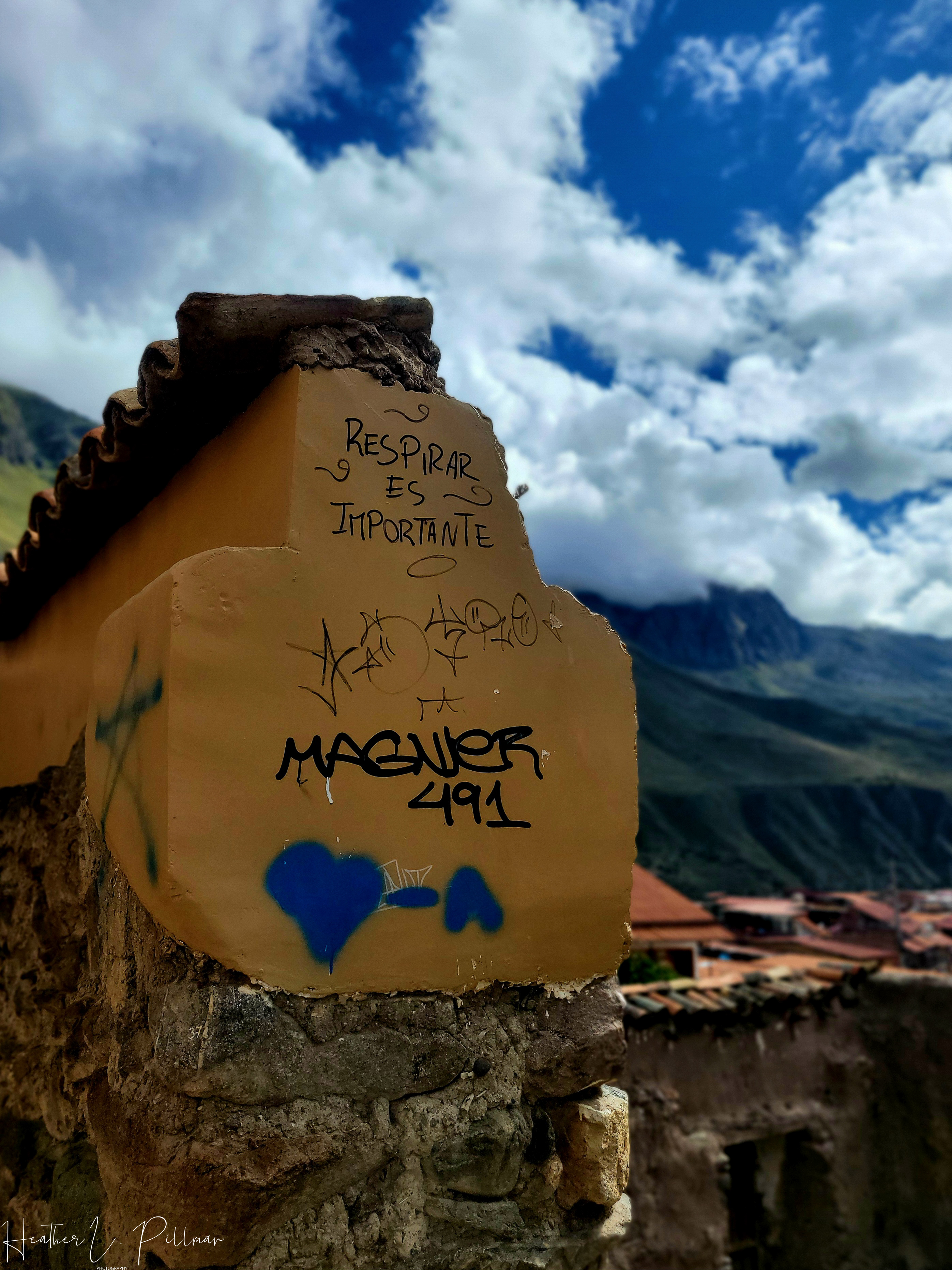
My arthritic lower body and I took one look at the steepness of this ruin and immediately thought there was no way I could make it, but J and Yarik nudged me on and with a few breaks, we made it to the top. You’re probably tired of hearing it, but Incan engineering truly is a marvel. Here, the Inca moved large granite boulders off of another mountain, across a river and up this mountain to build the fortress and the stunning Temple of the Sun at the top. These rocks weighed tons and they were moved by hand. We noticed protuberances on the granite here and were told this is how the Inca moved the cut stones into their final spots. Once the stone was placed where it would remain, someone had the job of filing the granite handles off. I immediately thank the Universe that I was not born an Inca. I don’t have the fortitude for that kind of work.

Ollantaytambo was impressive due to the sheer size of it all and for the fact that the Inca also thought well enough to build food storage facilities up the side of an adjacent mountain. Fountains and alpacas are also present here. We were dropped at our hotel that evening and J picked us up a take-out order.
Friday morning arrived and we were ready to meet our driver, Adner, who we’d hired to take us to Pisac, site of another Inca ruin. We were out of cash, so I braved the street vendors and alpaca ladies to run to an ATM while J waited for Adner. When I arrived back to the hotel, a man had pulled over and encouraged us to get into the car to head to Pisac. I kept asking him in Spanish if he was Adner, if he had a reservation for Heather and he kept replying that yes, he could take us to Pisac. Eventually, we all came to the conclusion that he was not our driver. We hopped out of that car about 2 blocks from the hotel and made our way back in time to meet the real Adner.
Off to Pisac, we made our way through the people and dog filled streets when the unthinkable happened. Our driver tried to stop, but hit one of the many dogs running the streets of Cusco. I had my eyes closed and was glad I didn’t see it. If you are driving in Cusco, be careful. There really are hundreds of dogs out and about.
Adner suggested a stop at Manos de la Comunidad, a weaving co-op/llama and alpaca farm/animal rescue. Here I got to feed llamas and alpacas and buy some baby alpaca hair sweaters. We also got to see a weaving demonstration and lay eyes on the vicuña, a smaller, meaner cousin of the llama. Vicuña are wild and are prized for their hair as it’s much softer than even baby alpaca. You have to have a special license to catch and shear vicuña before releasing them. It takes 5 vicuña to make a sweater and you’ll pay thousands of dollars for one. The vicuña here are injured and are being rehabilitated before their release back into the wild. Two Andean condors are here in rehab, as well. They are huge.
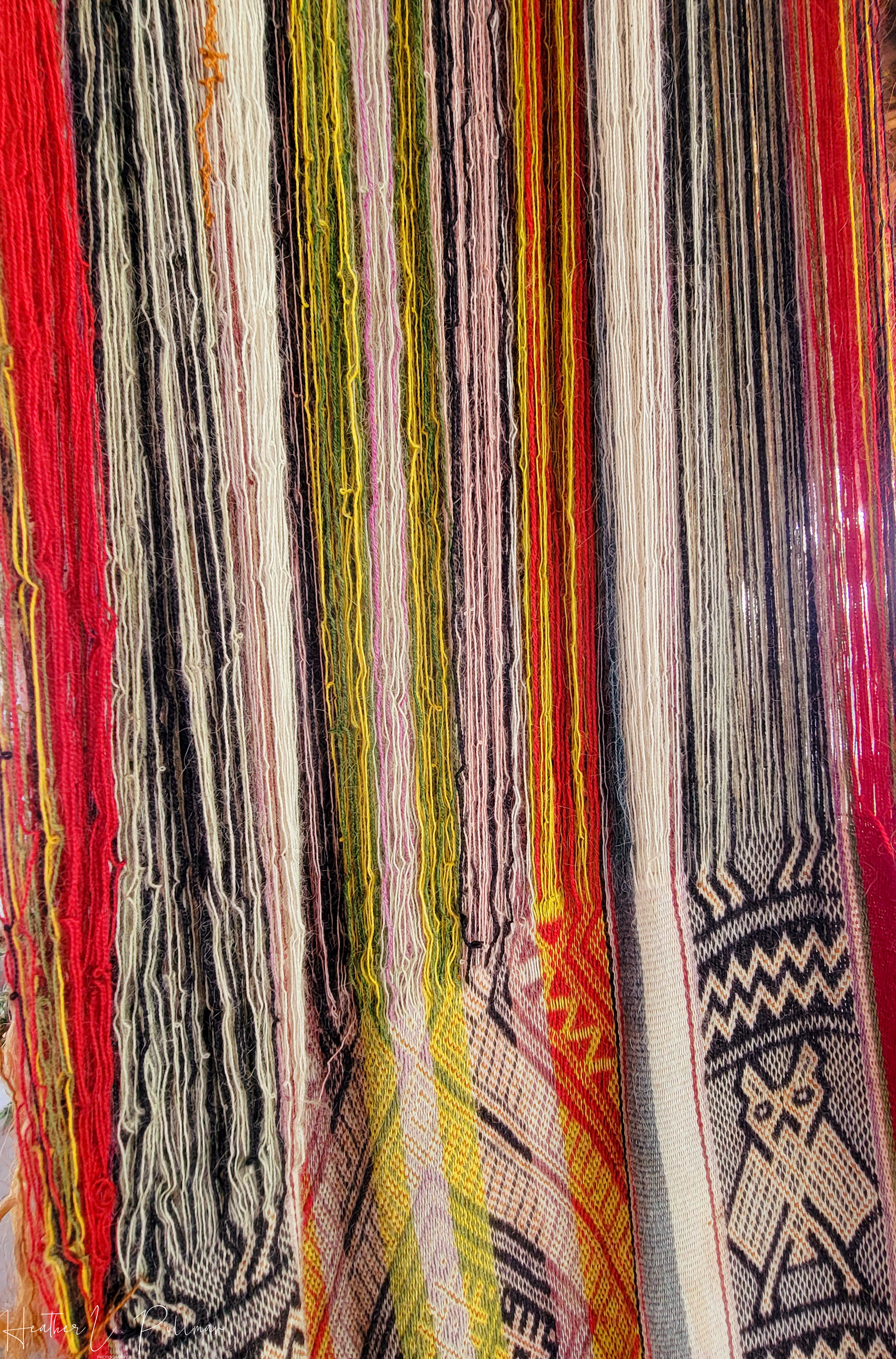
Sweaters in hand, we made our way down into the Sacred Valley, stopping at an overlook with an astonishing view. Adner is also a tour guide, so he gives us the run down on the valley and the location of the different branches of the Andes Mountains. We head up another mountain to our last steep hike of the trip: the ruins at Pisac.
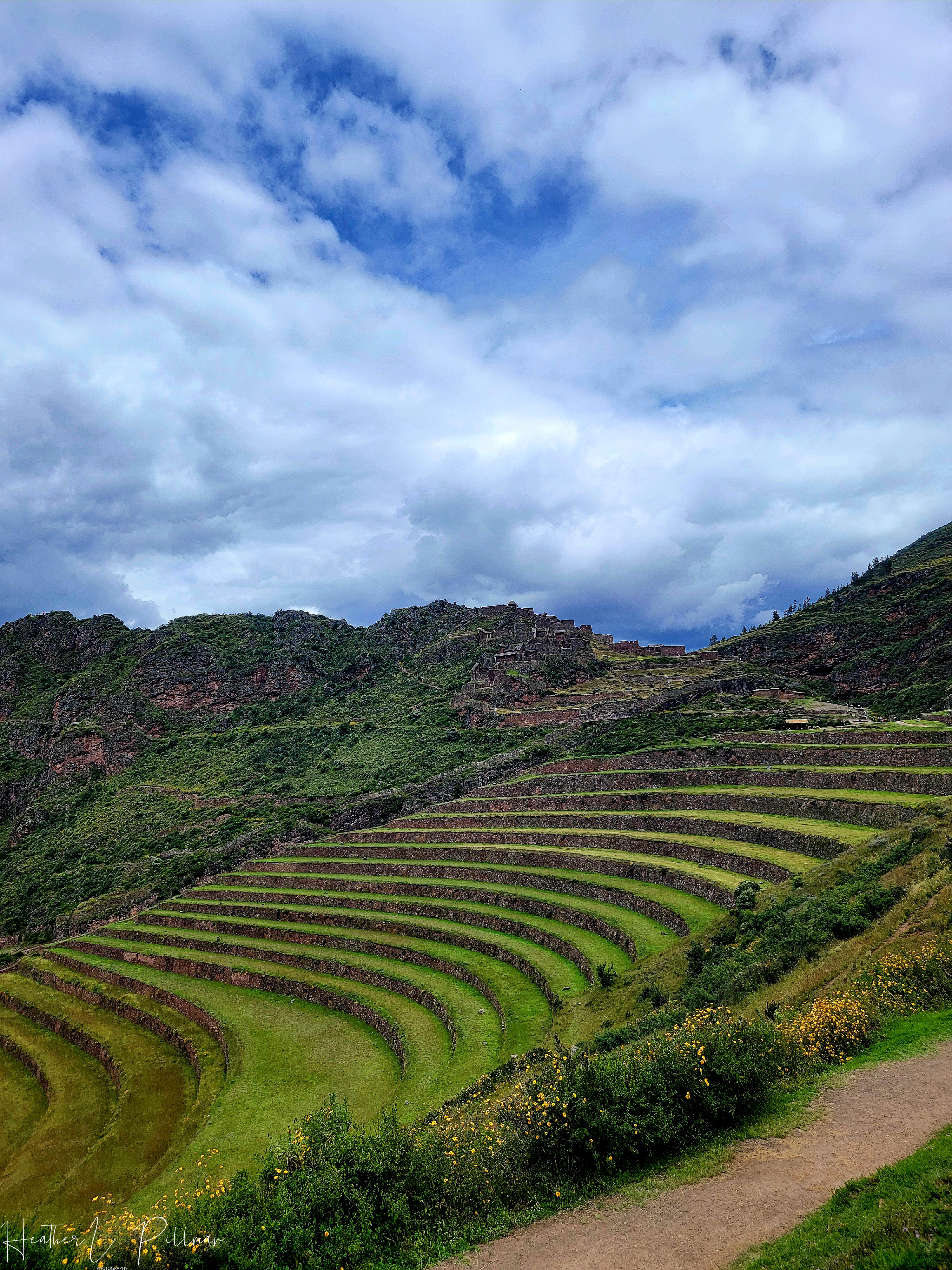
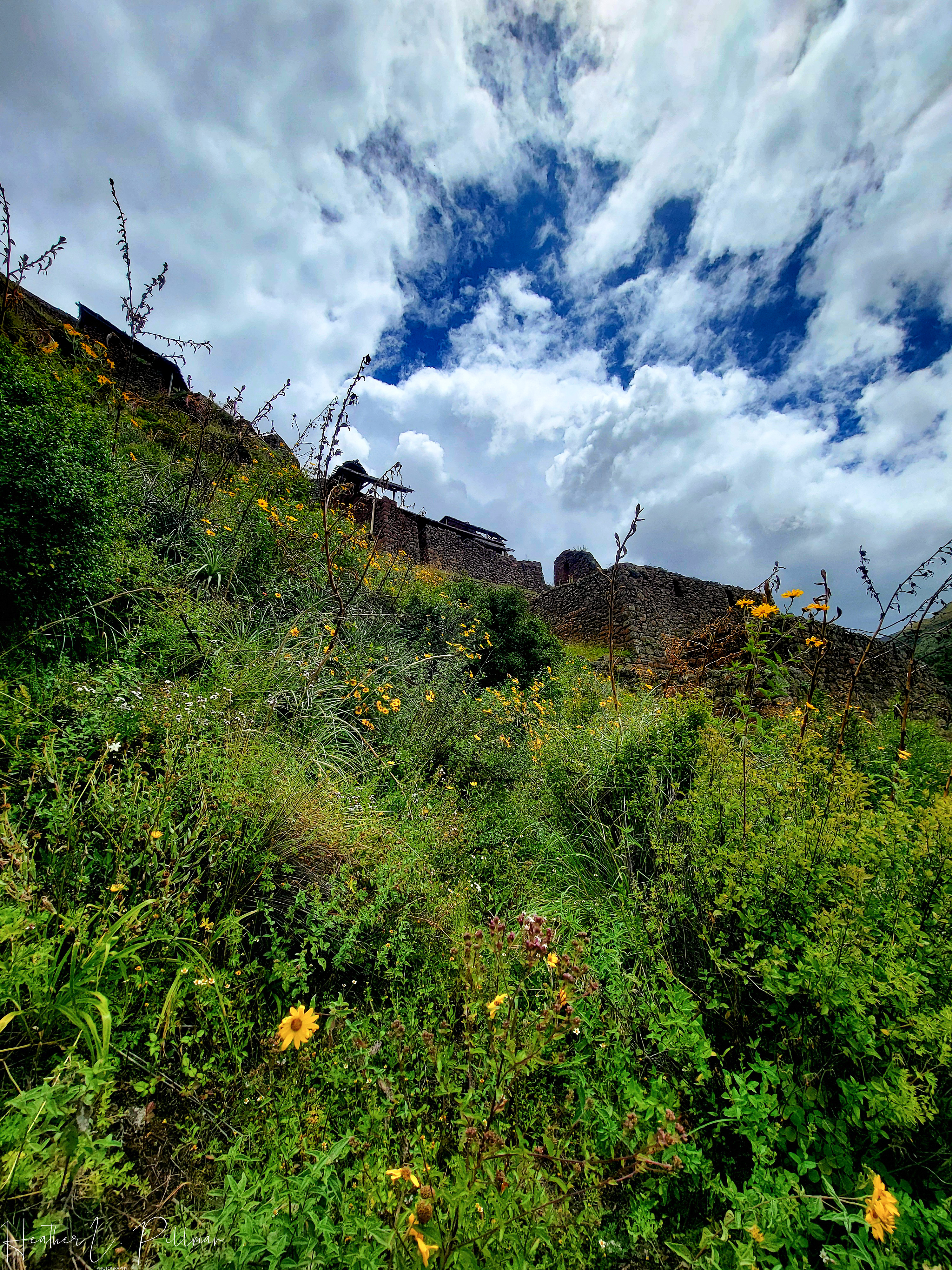
The site at Pisac is bigger than Machu Picchu. There are remnants of Inca housing here, the farming terraces, and even spots where the Inca left their mummies. There are alpacas and llamas grazing and the grounds are breathtaking. We didn’t make it to the top of the ruins – only about 2/3 of the way up. We got great views of the former neighborhood and fortress in any case. You can also enjoy the views of modern day Pisac just below. We opted not to, but you can hire a guide at Pisac (or any of the other sites) for about 20 Soles (approximately 5 USD) per person. We took our time here climbing the uneven stairs up to some homes, resting at the overlook of the farming terraces, before Adner picked us up. Pisac is also the site of a silver mine (and I’m sure jewelry shopping), but we opted to head back to Cusco for our last dinner.
A quick walk from the hotel and we sat down for Aji Gallina, another local dish – a curried chicken- and for me, another Pisco Sour. Our evenings in Cusco had been pretty relaxed. It was after dark and I was lounging in my pj’s when I heard a marching band. I threw on my sneakers and sweater and ran down the street to catch a glimpse of another Holy Week event, the Procession of the Holy Sepulcher, which reenacts the procession of Christ to the grave. Holy Week is very lively here. Running down the street was fine, hiking three blocks uphill to the hotel had me questioning my decision.
Saturday was our last day in Cusco. We had breakfast across the street at Jack’s, packed up, checked our luggage in at the front desk, arranged an afternoon cab to the airport and set out to see the inside of the Cusco Cathedral. Timing earlier in the week just hadn’t worked out but we were able to see the stunning Cathedral today. The large basilica is flanked by two smaller churches. Full of art and sculpture, we saw the Lord of Tremors or Black Christ back in his rightful spot after the Holy Monday procession. We marveled at the carved wood choir loft and at the Last Supper painting where cuy or guinea pig is the main dish on the table. Photography is not allowed inside the Cathedral but if you’re in Cusco, it’s absolutely worth a stop.
We then attempted to hit the Inca Museum which we’d also missed all week. It was only open Monday through Friday so we settled on a little stroll, some shopping, a coffee and then a visit to the Museum of the Monastic Life, housed in an active monastery in Cusco.
3:00 PM arrived quickly and we loaded into our cab to the airport. Halfway there, we were nearly t-boned in an intersection. Our cab driver said the other guy was at fault, but I’m not so sure. Thankfully, we made it to the Cusco airport in one piece. We got through security quickly and ended up waiting longer than expected due to our delayed connection to Lima. We built in some buffer time as Cusco is notorious for delayed flights.
We made it to Lima about 9:30 PM, got our luggage (LATAM forced us all to gate check to speed up boarding in Cusco), and had a late dinner before our redeye flight home…hilariously, at a TGIFriday’s.
Here is where I got a bit cranky. We flew United home. The last two times I’ve flown United, the experience wasn’t great so I already had a bad taste in my mouth. We’re in line to board (we had the foresight to upgrade our seats on the way home). We are scheduled to depart at 12:55 AM. At 12:30 AM, it is clear this is not going to happen. If you fly home from Lima, here’s what you need to know. No liquids over 3.4 ounces even if you bought them in the Lima Airport (this included the bottles of water we just bought). Your carry-on bags are also subject to manual search by a line of 18 year old airport assistants. They are looking for “liquids.” When I got to the front of the line, the kid searching my big backpack asked about liquids. I responded that liquids were in my small bag and he answered back that he didn’t want to see those. He patted my stack of clothes once, twice and sent me on my way. There has to be a better system…portable x-ray machine, drug sniffing dog? Finally on the plane, I put my seat flat as soon as we were up in the air and woke up about 20 minutes from landing in Houston.
Houston customs and immigration was fine. J and I both have Global Entry which speeds things along. Going back through security made me a little mouthy as TSA apparently has new protocols that (a) contradict guidance posted in the security area and (b) are not listed anywhere on the TSA website. That’s all I’ll say about that. We indulged in a big breakfast and had a great conversation with our waitress at Houston Wheelhouse (hey, LaTonya!) and eventually made it through another United circus boarding of our delayed flight to Albuquerque.
I miss the high vibe, happy and relaxed atmosphere of Cusco and the kindness of the people in the Sacred Valley. I feel so fortunate to have visited this small piece of Peru. There are so many other things that I would like to go back to see in and I would most definitely return to Cusco and the Sacred Valley. I hope you get there too.
Want to see more of Peru? Check out my Peru album on Flickr.
 The Travels and Misadventures of Miss HeatherLynnP